Multifamily & Apartment Complexes
Apartment and multifamily water response
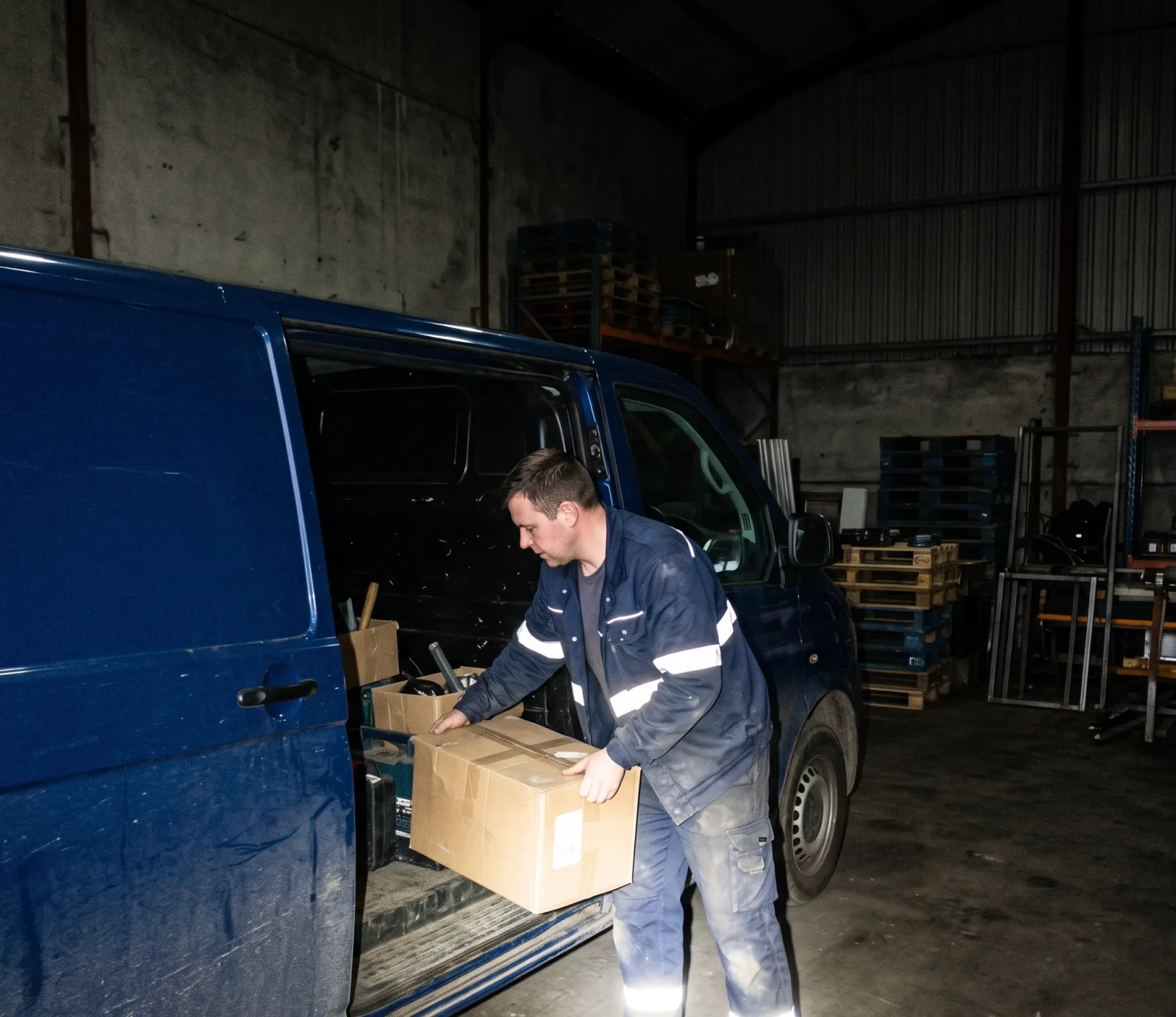
Fast extraction for Austin warehouse floors, racking, and stored inventory
Warehouse water damage in Austin usually comes from a roof leak, a flash flood alley downpour hitting the loading dock, or a hard-freeze pipe burst over pallet racking. The licensed pros we connect you with check inventory by SKU and pull moisture from the slab before it spreads through bulk storage.
A warehouse near North Burnet or off US 183 answers to a different clock than a house does. Open floor plates, high ceiling volume, and pallet racking loaded to the top mean a leak doesn't stay small. Water spreads across a concrete floor fast, and by the time it's noticed, it has already reached inventory.
A slab leak under a warehouse floor in Austin behaves like a slab leak anywhere in Travis County's clay soil, except the slab covers far more ground. Expansive clay shifts under a large footprint unevenly, and a crack that opens under a loading dock can leak for weeks before a wet spot shows on bulk storage above it.
Roll-up doors and dock levelers are common entry points during a Hill Country downpour. A dock door left cracked, a clogged drain at the base of a ramp, or runoff pooling against a low sill can put water on the floor faster than a facility manager expects, especially with flash flood alley rainfall rates.
Downtime costs more than the water does. A distribution operation near Parmer Lane or the Interstate 35 corridor runs on SKU counts and pick schedules, and a wet floor that shuts down forklift traffic for even a day can back up trucks and delay shipments well past that day.
Product loss shows up in the places nobody checks first. Cardboard cartons wick water upward from a concrete floor within hours, and pallets stacked at the bottom of racking take on moisture before anyone notices standing water. Shrinkage from a water event can outpace the visible damage by a wide margin.
| Trouble Spot | What Happens | Why It Matters |
|---|---|---|
| Roll-up door flooding | Runoff drives under the door onto the floor | Hours before pallets wick it up |
| Loading dock apron pooling | Water backs up against the dock, seeps inside | Same day, before forklift traffic spreads it |
| Roof leak over racking | Drips travel down upright frames onto boxed SKUs | Same day, top shelves first |
| Sprinkler head discharge | Wide floor soak, often near stored cartons | Hours, extraction and airflow start fast |
| Climate control failure | Humidity swing risks moisture-sensitive inventory | 1 to 3 days to restabilize air |
| High-ceiling open bay | Air movement can't reach a leak that high alone | 3 to 5 days, staged equipment |
| Bulk storage saturation | Water climbs stacked cartons and shrink wrap by capillary action | 2 to 4 days, pallet by pallet |
| Standing water near equipment | Forklifts, conveyors, electrical panels sit in the path | Facility closed until the floor clears |
Climate control works differently across a warehouse floor than it does in a house. Many industrial buildings in Austin run zoned or minimal HVAC across a large volume of air, so once humidity rises after a leak, it can sit unevenly across the space instead of drying out on its own.
Racking itself is the part nobody thinks to check. Base plates and anchor bolts sit straight on the slab, so they stand in whatever pooled there, and a bay loaded to its rating is not something to judge by eye afterward. Getting bottom-shelf product up off the floor early is usually the most useful thing a facility manager can do before help arrives.
Scale changes the response. A warehouse floor near the Austin-Bergstrom Airport area can run tens of thousands of square feet, and drying it means moving equipment fans across open bays, not just one room. Bulk storage racks, loading dock aprons, and the concrete slab itself all need separate attention before the building is safe to reopen.
Older industrial buildings around East Austin and North Burnet often carry flat or low-slope roofs, and those roofs pond after a hard Hill Country rain. A slow roof leak over bulk storage can soak insulation and racking for days before it drips low enough for anyone on the floor to see it.
Fire suppression systems bring their own risk. A sprinkler head that fails from age, or a system that discharges without a fire, can release far more water in a short time than a roof leak ever would, and it lands directly on whatever inventory sits below it.
A warehouse claim near North Burnet or the Austin-Bergstrom airport area turns on documentation most homeowner policies never touch. An adjuster needs a pre-loss inventory count, and the licensed pros we connect you with log which pallets, sku groupings, and bulk storage lots took on water versus which stayed dry, since shrinkage claims get challenged without that split recorded early.
Pallet racking loaded near a high ceiling changes how a flooded floor gets cleared. Nobody can safely pull product down for inspection while a forklift sits in standing water, so power to that equipment gets cut and batteries get checked before anyone reloads it. Climate control units serving temperature-sensitive inventory also need a check before they run again.
Speed matters here for a reason a small office never faces: square footage. A leak that would stay contained in a retail space can spread across an entire warehouse floor before anyone finds it, especially with high ceilings hiding a slow roof leak. The longer bulk storage sits wet, the more product loss compounds.
A facility off Parmer Lane or near US 183 cannot idle a loading dock for a week waiting on wet concrete. Every day of equipment downtime with racking still wet is a day the supply chain behind it backs up. Roll-up doors get sealed, drying equipment goes in fast, and Austin's summer humidity makes slow drying worse, not better.
Older industrial buildings raise the stakes further. A warehouse converted from an earlier use often carries a concrete slab retrofitted with plumbing runs added long after the original build, and Austin's clay soil movement can stress those joints over time. Getting the floor dried fast protects inventory that has not shipped, equipment that cannot sit idle, and the supply chain commitments tied to both.
Onion Creek, Shoal Creek, and Waller Creek each flood on their own schedule. A house near Onion Creek in the Dove Springs or Onion Creek area can take on water while Hyde Park stays dry the same afternoon, because these creeks rise and fall independently during Hill Country storms.River Place, Northwest Hills and Steiner Ranch. Homes along Onion Creek or close to the Colorado River sit inside mapped flood risk that a lot a few streets over in Barton Hills does not share. A licensed pro who knows which side of that line a house falls on gives a more honest answer than a guess.
Slab foundations dominate Austin, and clay soil under them swells after rain then shrinks in drought, opening cracks that let water track inward near Zilker or Travis Heights. A hard freeze can split supply lines feeding these slabs too, so cold snaps and clay movement both end up as indoor water.A commercial space along Guadalupe Street or near the UT Austin campus often costs more to dry than a house. Open layouts and hard flooring mean more equipment and longer run times. Get a written scope before the licensed pros in Austin begin. pricing guide, and the commercial overview covers how a scheduled program works.
Apartment and multifamily water response
Condo & HOA Properties
Hotels & Hospitality Water Response
Fast matters more here than at a small office. Pallet racking near the concrete floor can wick water within hours, and a forklift left standing in it risks battery damage. The goal is arrival within hours of the call, with drying equipment running the same day to keep product loss and downtime from compounding.
In Austin, flash flood alley runoff or a burst pipe from a hard freeze can flood a loading dock fast. The licensed pros we connect you with typically respond the same day, including nights, since a wet slab near Parmer Lane or US 183 only gets worse left alone.
Not always. Cartons stacked on lower racking near a wet concrete floor absorb moisture first, but pallets stored higher often stay dry. The licensed pros we connect you with sort product by condition instead of writing off an entire section on sight.
It depends on ceiling height and how much of the concrete floor took on water. A facility off Ben White Boulevard with tall bays and open bulk storage needs more drying time than a smaller space with normal air circulation.
Standing water on a warehouse floor moves fast toward pallet racking and SKU-coded stock. Reach out and get connected with licensed pros near North Burnet who can start extraction before shrinkage numbers climb.
Call (512) 764-6583