A soggy, spongy patch near the sprinkler head
A lawn patch that stays wet for days after the rest of the yard dries means a buried line is leaking underground, not that the sprinkler schedule ran long.
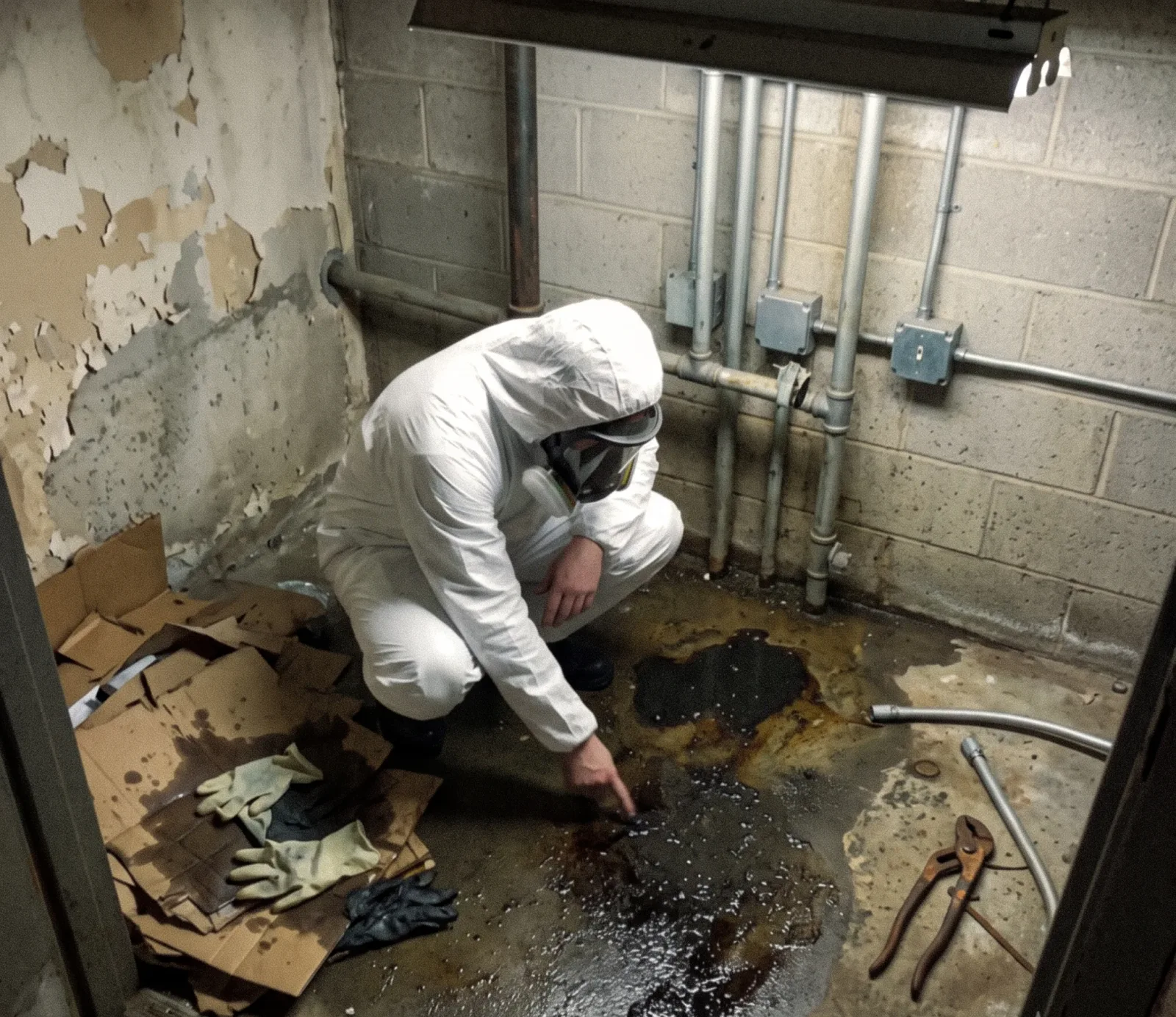
Risk rises in late summer when dry, cracked clay soil suddenly gets heavy irrigation or a Hill Country storm, and shifting ground stresses aging buried lines.
It happens when a buried sprinkler pipe or fitting splits underground, usually from clay soil shifting or root pressure, and water pools in the yard instead of reaching the sprinkler heads. In Austin, this often shows up as a wet patch near Circle C Ranch or Steiner Ranch lawns and can migrate toward the slab if left running.
Water under an Austin slab doesn't move the same everywhere. A crack near Zilker sits on different rock than one in Mueller, and that changes how far moisture travels before anyone notices a soft spot in the floor.
A lawn patch that stays wet for days after the rest of the yard dries means a buried line is leaking underground, not that the sprinkler schedule ran long.
Grass growing unusually thick or dark green in one strip often follows the buried line's path and marks exactly where the underground break sits.
Water pooling near a slab wall on the irrigation side, away from any downspout, suggests the break has migrated close enough to threaten the foundation.
A sprinkler zone with weak or uneven spray pressure while the rest run normally points to a break upstream of the low-pressure heads pulling water away.
Soft, sinking ground you can feel underfoot near a sprinkler valve box means water has saturated the soil enough to erode support beneath it.
Circle C Ranch and Steiner Ranch have thousands of slab homes with irrigation systems installed during 1980s through 2000s development, and buried lines running near foundations age into cracks as clay soil shifts under them.
Austin's clay soil swells and shrinks with rainfall swings, and that constant movement stresses buried irrigation fittings over years, especially on lots graded close to the slab edge.
Cracked cast iron under an older Hyde Park or Cherrywood slab lets water travel sideways before it ever shows on a wall. By the time a stain reaches the baseboard near French Place, the moisture has usually been spreading under the flooring for days.
Overwatering from a sprinkler zone left running too long, which dries out once the schedule is corrected instead of staying wet continuously. People assume it is just an overwatered lawn, but a break keeps one spot wet even during dry, rain-free stretches around Lady Bird Lake weather patterns. Overwatering fades once you skip a cycle; a broken line stays wet, and the grass nearby often grows unevenly thick or yellows where the water pools.
The licensed pros we connect you with trace the irrigation line from the controller valve outward, checking for the wet patch's edges and whether water has reached the slab perimeter or exterior wall base near the foundation.
They check soil moisture and grade near the slab to judge whether clay has already shifted, then decide if the irrigation repair is separate from any foundation or interior moisture work the break may have caused.
Austin sits on a fault line between two soil types, not a coastline, so flooding here means Onion Creek or Shoal Creek rising fast, or a post-tension slab cracking under clay soil movement near I-35. The licensed pros we connect you with read that difference before they open a wall.
| What's Covered | Cost Factors |
|---|---|
| A slab crack in Tarrytown or Hyde Park does not announce itself. Clay soil under the foundation shifts with rain, and water finds the gap weeks before a stain shows on the carpet or baseboard inside. | Onion Creek and Shoal Creek rise fast after Hill Country storms, and homes near Mueller or East Cesar Chavez can see water at the door within an hour. Slab foundations mean that water spreads across floors immediately, with no basement to slow it down first. |
| Austin's flood risk isn't a coastline problem, it's a grading problem. Water crossing Shoal Creek or Waller Creek during Hill Country storms backs into low-lying yards near Travis Heights and Mueller before it ever reaches a wall. Add a post-tension slab losing its seal, and moisture gets inside without a single pipe failing. | A downpour that swells Boggy Creek or the Colorado River can trap runoff against a slab edge faster than gutters carry it away. Homes closer to Montopolis or Windsor Park feel this first, since grading there sends water toward the foundation instead of past it. |
| Clay soil under Travis Heights shifts through wet and dry spells, opening gaps beneath post-tension slabs that plumbing leaks slip through unnoticed. Winter adds a second threat: pipes near Waller Creek can split open once temperatures drop hard and fast. | Waller Creek and Shoal Creek both cross Austin's central grid, and a fast summer storm can push either one over its banks near Hyde Park or Allandale within an hour. Slab foundations sit low to that grade, so runoff finds a door before anyone gets home. |
Turn off the irrigation zone at the controller and shut the backflow valve if you can reach it safely. Do not dig near the slab or excavate around the foundation; that is not a homeowner job once clay soil has already shifted. Note where the wet patch sits relative to the house, then call the licensed pros we connect you with before it reaches the slab.
A broken irrigation line is a yard problem until the saturated ground reaches the slab, and then it becomes a building one. Nothing here diagnoses anyone. What matters is that clay held wet for weeks against a foundation edge moves, and once a slab moves there is a path indoors for water and, after that, for the damp that feeds growth. Standing water in a lawn also draws mosquitoes through an Austin summer, which is a reason to deal with it quickly whatever the slab is doing.
A slab crack near Shoal Creek or Waller Creek won't wait for business hours. Reach out now and a licensed pro can start today.Water that sits for days near Zilker or Hyde Park can turn a drying job into a mold job. Once growth starts, TDLR-licensed mold remediation is priced apart from extraction and drying. Ask for both numbers in writing before the licensed pros in Austin start work. pricing guide, and the service that handles this is Slab Leak Detection & Repair.
Water Damage Restoration. A burst supply line is a pressurized pipe feeding a sink, toilet, or washer that splits open, usually from a hard freeze or pipe corrosion at an old joint.
Laundry Room Flooding. A washing machine overflow happens when a hose, valve, or the tub itself lets go and dumps water across the laundry room floor.
Water Damage Causes, Austin. A sewage backup happens when wastewater has nowhere to go and pushes back up through a toilet, tub, or floor drain.
Look for one patch of lawn that stays soaked or spongy for days, even when the rest of the yard dries out normally after Austin's Hill Country storms pass through. If it sits near the slab edge, that is the one to worry about.
Irrigation line breaks are typically not covered, since the line itself sits outside the home and standard homeowner policies generally treat outdoor irrigation systems as excluded. If the leak causes slab movement or interior water intrusion, coverage depends on the specific policy language.
It can soak a small yard patch for weeks without touching the house, but once clay soil near the slab stays saturated, movement can start within days, especially close to Barton Creek or Onion Creek clay-heavy lots.
A few weeks of a small leak mostly wastes water and raises the bill. Left months longer, saturated clay near the slab can shift enough to crack the foundation or open a path for water intrusion indoors.
West of the Balcones Escarpment, limestone sits close to the surface around Bull Creek and Barton Creek Greenbelt, so runoff moves fast instead of soaking in. A hard rain there fills low-lying yards before it ever reaches Lady Bird Lake downstream.
Call (512) 764-6583