When a Hard Freeze Splits Your Pipes in Austin, TX
Why one cold snap bursts pipes across Travis County all at once, and what the thaw reveals.
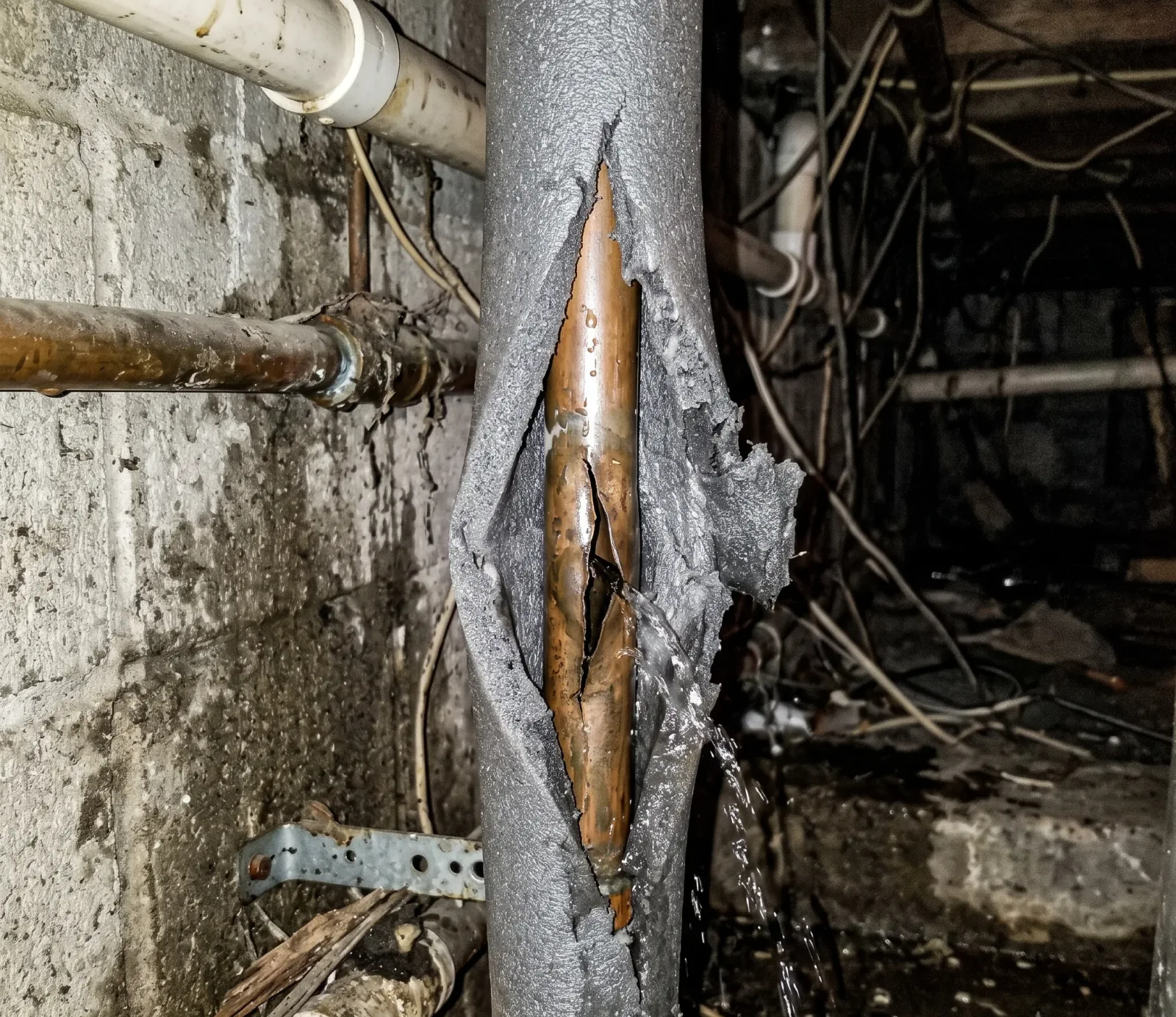
A hard freeze cracks pipes in exterior walls, attics, garages and at hose bibs because water expands as it turns to ice. The break stays dry while the pipe is still frozen solid, then floods the house once the ice melts on the thaw. Shutting off the main valve fast limits how much water gets out.
Why One Freeze Breaks So Many Homes
Austin's plumbing was built for a mild-winter market, not a Chicago winter. Average January lows sit around 41°F, so builders never had a reason to bury pipe deep or wrap it heavily. That gap between normal design and an actual hard freeze is why one cold snap, like Winter Storm Uri in February 2021, can burst thousands of pipes across the city in the same week.
The pipes that fail first are the ones sitting outside the home's heated envelope. Hose bibs on exterior walls, supply lines run through unconditioned attics above Hyde Park or Crestview bungalows, and lines in garages take the brunt. Older pier-and-beam homes near Travis Heights or Clarksville, with true crawl spaces underneath, expose more pipe to open cold air than a slab home does.
Exterior walls are the other weak point, especially additions or garage conversions common in South Austin and Windsor Park where a supply line was routed on the cold side of the insulation without much thought at the time. None of this is a construction defect specific to one builder. It is standard practice for a place that only needs freeze protection once every few years.
Which Pipes Actually Burst Here
A pipe usually does not fail during the freeze itself. Water inside a frozen section expands and cracks the pipe wall while everything is still solid ice, but no water is moving yet so nothing leaks. The real flood shows up on the thaw, when the ice melts and pressurized water finally reaches that crack. That delay is why so many Austin homeowners wake up to a flooded kitchen the day after the cold breaks, not during it.
This timing catches people off guard because the coldest night feels like the danger point, but it is the warm-up afterward that does the damage. A hose bib that froze solid on a Tuesday night in Tarrytown might not show a burst until Thursday afternoon, once temperatures climb back above freezing and full water pressure returns to a pipe that already has a hairline fracture running through it.
- Hose bibs sit outside with no insulation of their own, so the line just inside the wall is often the first to split in a hard freeze.
- Pipes running through exterior walls have less insulation around them than interior runs, and cold air finds those gaps fastest during a multi-day freeze.
- Garages are rarely conditioned space, and a washing machine hookup or water line along that wall sits closer to outdoor temperatures than the rest of the house.
- Attics above the insulation layer swing close to outside air temperature, so any supply line run through that unconditioned space is exposed the same way an outdoor pipe would be.
- Older homes with a true crawl space, common in some pier-and-beam construction, expose plumbing to ground-level cold air that a slab foundation would otherwise block.
- A pipe doesn't have to be outdoors to freeze; anywhere cold air reaches faster than house heat, like a north-facing exterior wall, carries the same risk.
Why The Flood Hits On The Thaw
Copper lines running through exterior walls near Zilker or Tarrytown sit closer to outside air than most people realize, and that thin buffer is why a single cold night can crack a fitting. Attic runs above Circle C Ranch or Steiner Ranch garages face the same exposure from the other direction, with only roof insulation between the pipe and the freezing air outside.
Hose bibs and garage lines are usually the weakest point because they sit outside the home's main heating loop. A splitter left connected on a Hyde Park or Windsor Park exterior wall traps water right at the valve, and that trapped water is what expands and splits the fitting once temperatures drop below freezing for several hours straight.
- Ice inside a pipe expands and can split the wall of the pipe itself, but the crack usually stays sealed by the ice plug until temperatures rise again.
- The thaw lets water flow again through a pipe that's already cracked, so pressure pushes water straight out the split instead of down to the fixture.
- A slow drip during the freeze can mean a crack has already formed upstream, even before the full flow returns and the leak becomes obvious.
- Homes near Lake Travis, Steiner Ranch, and other Hill Country lots with more exposed plumbing runs on sloped ground can see damage in more than one spot at once.
The First Ten Minutes Matter Most
Prevention in Austin does not require the kind of insulation a northern climate needs, but a few steps make a real difference during a hard freeze. Wrapping exposed hose bibs and any supply line running through a garage or unconditioned attic in Circle C Ranch or Steiner Ranch homes closes off the most common failure points before a cold snap arrives.
Homeowners near Mueller or Cherrywood sometimes assume a burst happened the moment the temperature dropped, but the pipe usually just cracks quietly while frozen solid. Nothing leaks until the ice inside plugging the split finally melts, which is why water shows up on a warming afternoon well after the cold snap has already passed.
| Situation | What To Do | Freeze Risk Level |
|---|---|---|
| Water actively spraying inside | Shut off main valve first | Cut power near the leak |
| Ceiling sagging or dripping | Puncture a low corner to drain | Move furniture out first |
| No visible break yet | Check attic, garage, hose bibs | Feel for damp drywall |
| Water pooling on the slab | Photograph before you mop | Call your insurer same day |
| Power still on near water | Stay out of that room | Wait for power to be cut |
Prevention Worth Doing Before Winter
Knowing the home's water shutoff location ahead of a freeze warning is the single most useful thing an Austin homeowner can do. Many people find out where the valve is for the first time while standing in water, which costs precious minutes. Testing it once a year, before cedar fever season even starts, confirms it still turns freely when it matters.
Homes near Onion Creek or Shoal Creek face a second layer of risk once ground saturates from a burst line combined with runoff, since Austin's clay and limestone soil sheds water fast rather than absorbing it. A slow leak that would drain away in sandier soil elsewhere can pool against a slab foundation here instead.
What Insurance Usually Expects Of You
A single hard freeze rarely explains why an entire block loses water at once, but a shared construction era does. Neighborhoods built in the same decades, from Allandale to Milwood, tend to share the same pipe materials, the same attic layouts, and the same exposure gaps, so one cold night finds every weak point on the street at roughly the same time.
None of this replaces the cleanup once a pipe has actually burst and water has already reached flooring, drywall, or a slab foundation. That is separate restoration work with its own drying and repair process. What this page covers is what happens leading up to that point, and what a homeowner can control in the minutes right after a pipe fails.
Freeze Facts Worth Knowing
- Average January lows in Austin run around 41°F, so most winters bring only a brief freeze rather than sustained cold.
- Winter Storm Uri in February 2021 caused thousands of burst-pipe losses across the Austin area during days of below-freezing temperatures.
- Homes built for a mild-winter climate often have less pipe insulation in attics, garages, and exterior walls than homes built for sustained cold.
- A burst pipe often shows no water at all until the ice inside it melts and pressure returns to the line.
- Hose bibs and the pipe just behind them freeze first because they sit against an exterior wall with no interior heat reaching them.
- Pier-and-beam homes with a crawl space expose plumbing to ground-level cold in a way a slab foundation home typically does not.
Frequently Asked Questions
Why do Austin pipes burst during a freeze?
Not usually from a single cold night. Austin plumbing has less freeze protection than northern homes because hard freezes are rare, so exterior walls, attics above rooms in Hyde Park or Crestview, and garage lines are exposed. A burst typically shows up during the thaw, once meltwater reaches the cracked section under full pressure.
How do I know a pipe froze overnight?
Little or no water pressure at a faucet, a faint knocking sound in the wall, or frost on an exposed section of pipe near a garage or hose bib are the earliest signs, usually noticed before any water shows up.
What should I do the moment a pipe bursts?
Turn off the main water valve right away, even before you find the crack, since that stops the flood at its source. Then open a faucet to relieve pressure and check the attic, garage, and any exterior walls for damage.
Which pipes freeze first in an Austin house?
Austin's average January low sits near 41°F, so builders here rarely bury pipes as deep or insulate attic runs as heavily as northern markets require. One hard freeze then catches thousands of homes with the same exposed hose bibs and thin attic insulation at once.
How can I stop pipes from freezing again?
Wrapping exposed pipes in garages and attics with insulation sleeves, sealing gaps that let outside air reach plumbing, and letting a faucet drip during a hard freeze are the practical steps worth doing before the next cold snap.
Pipes thawing out right now?
If a hard freeze already hit your home in River Place, Circle C Ranch, or anywhere else in Travis County, shut off the water and get the damage assessed before it spreads further.
Call (512) 764-6583