What Happens During Reconstruction After Water Damage in Austin, TX
Drywall, flooring, permits, and the inspection that has to pass before the job is done.
Rebuilding after water damage in an Austin home means drywall, flooring, and sometimes subfloor and framing replacement, followed by insulation, cabinetry, trim, and paint. Permits apply based on scope, not the fact that water caused the damage. City of Austin inspectors check work before walls close, and a final walkthrough with a cleared punch list closes out the project.
Drying Ends, Rebuilding Starts
Reconstruction starts once moisture readings on drywall, subfloor and framing come back dry, not before. In Austin homes on a slab foundation, that usually means the drying crew has already cleared a room before a rebuild crew shows up. Skipping ahead and closing up walls over damp framing is how a Travis Heights or Crestview bungalow ends up with a hidden mold problem a year later, buried behind fresh paint.
Drywall replacement is the most visible part of the rebuild, but it is rarely just drywall. Water wicks upward inside a wall cavity, so cuts are often made higher than the visible stain to remove everything that got wet. In older Hyde Park or Clarksville houses with plaster or lath underneath, matching the original wall texture takes more skill than a straight drywall swap.
Flooring replacement depends on what got wet and how long it sat. Laminate and engineered wood in a Mueller or Windsor Park home usually has to come out once water gets under the planks, since it swells and does not flatten back out. Tile and concrete slab floors often survive with cleaning alone. Carpet padding almost never survives standing water and gets pulled even when the carpet itself looks fine.
What Gets Torn Out and Why
Subfloor replacement follows once the finish flooring is gone, if the moisture reached that far. Plywood or OSB subfloor that stayed wet for more than a day or two tends to swell, delaminate, or soften enough that it will not hold a fastener properly. A soft or springy spot underfoot in a South Austin or Allandale home after a leak usually means the subfloor, not just the flooring on top, has to come out.
Framing repair comes up less often than drywall or flooring, but it matters most when it is needed. Wood studs or sill plates that sat in standing water for days can lose structural strength even if they look fine from the outside. A rebuild crew checks framing before closing walls back up, since covering compromised lumber with new drywall just hides the problem for the next owner of a Bouldin Creek or Travis Heights house.
- Drywall replacement starts once moisture readings confirm the studs and insulation behind it are dry, not just the surface. Cutting too soon traps humidity Central Texas air won't help release on its own.
- Framing repair comes before anything gets covered up. Studs or sill plates softened by a slab leak or creek flooding near Shoal Creek get cut out and replaced so the wall carries weight the way it did before.
- Subfloor replacement matters most under original flooring in older homes near Travis Heights or Rosedale, where a slab leak or a burst pipe from a hard freeze can soften plywood or particleboard underneath.
- Cabinetry along an exterior wall often gets pulled during demolition and either reset or rebuilt once framing and subfloor work near Waller Creek or Boggy Creek flood zones passes inspection.
- Flooring installation timing depends on material. Tile and LVP can go down once the subfloor tests dry; solid hardwood in a Clarksville or Allandale home needs a longer acclimation period first.
- Painting and a textured finish come after drywall repairs are sanded and primed, matching the existing wall texture in a Crestview or Brentwood house so the patch doesn't show under lamp light.
Permits and Inspections on Repairs
Insulation replacement almost always happens alongside drywall work, since removing damaged drywall exposes the wall cavity anyway. Wet fiberglass batts lose their insulating value and do not dry out on their own once soaked. In a Rosedale or Allandale home, this is also the point where an inspector or contractor checks for gaps in the vapor barrier or air sealing that the original construction may have missed.
Cabinetry takes damage differently than drywall does. Particleboard cabinet boxes under a kitchen sink or in a bathroom near Cherrywood or French Place swell and delaminate quickly once wet, while solid wood face frames can sometimes be saved. A rebuild often means replacing lower cabinet boxes while keeping doors and hardware, which keeps the cost and the mismatch with existing cabinetry lower.
- A building permit through Austin's Development Services Department applies to most structural, electrical, plumbing, or mechanical work in the rebuild, not just cosmetic repairs like paint.
- Code compliance gets checked at inspection, covering things like proper vapor barriers behind new drywall and correct wiring in a wall that had to be opened up for framing repair.
- An emergency repair under Austin's program can begin before the permit is issued, but the paperwork and inspection still have to follow to close out the job legally.
- Skipping the permit step to save time can cost more later, since unpermitted work can complicate a home sale or an insurance claim tied to a property near Windsor Park or Mueller.
Rebuild Choices and Their Tradeoffs
Permit requirements depend on scope, not on the fact that water caused the damage. The City of Austin Development Services Department issues permits for work touching structural, electrical, plumbing or mechanical systems, and a straight drywall and paint job may not need one while framing repair likely will. Austin's Emergency Permits program lets urgent repair work start right away, with the permit and inspection handled after the fact.
Code compliance gets checked at inspection, not guessed at during the rebuild. An inspector from DSD looks at framing, electrical and plumbing work behind the new drywall before it gets covered again, which is why framing repair and wiring get scheduled for inspection before walls close. Homeowners in West Campus or East Austin rental properties should ask directly whether their scope needs a permit rather than assume it does not.
| Decision | What It Involves | Honest Tradeoff |
|---|---|---|
| Drywall repair vs. full replace | Patch the wet section only | Cheaper now, mismatched texture later |
| Flooring replacement scope | Match existing vs. whole-room swap | Matching old flooring is often impossible |
| Subfloor replacement | Swap warped or delaminated panels | Skipping it risks squeaks, soft spots |
| Cabinetry decisions | Lower boxes vs. full kitchen redo | Swollen particleboard rarely survives drying |
| Insulation replacement | Wall cavity vs. attic-only swap | Hidden cavities are easy to skip, shouldn't be |
Finishing Touches Before You Move Back In
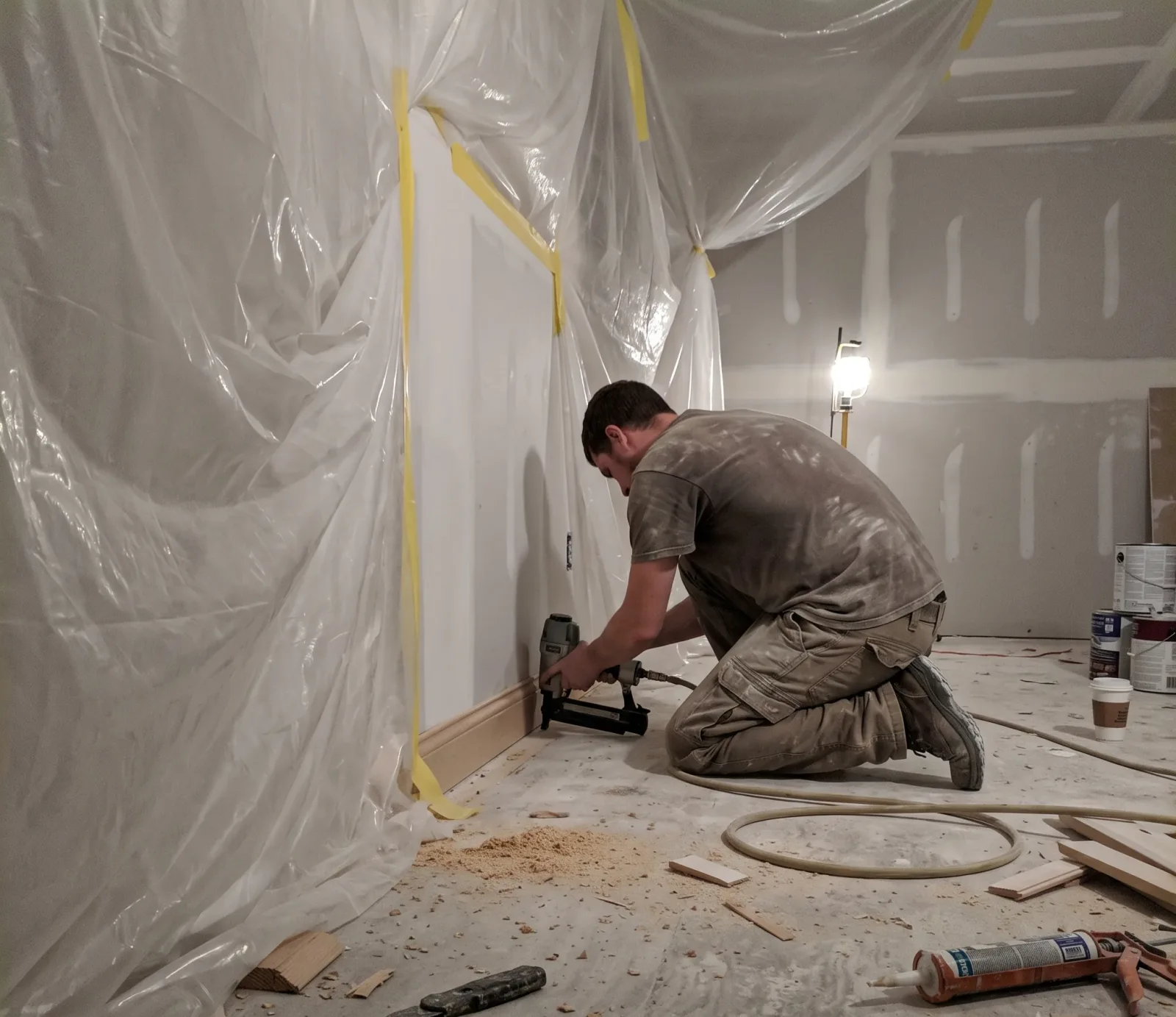
Baseboard, trim, and painting are the last visible layer, and they get held back on purpose until everything underneath has passed inspection. New drywall needs to fully cure before paint goes on, and a textured finish has to be matched to the surrounding wall or it shows under certain light. Trim gets reinstalled or replaced last since it covers the seam between new flooring and new baseboard.
Flooring installation timing depends on the material. Tile needs the subfloor fully dry and stable before it goes down, while engineered wood or laminate needs the room to sit at a stable humidity for a few days first, which matters in Central Texas humidity even with air conditioning running. A rushed flooring install over a subfloor that has not settled is a common source of squeaks and gaps later.
What to Ask the Rebuild Crew
A punch list is the walkthrough where small leftover items get written down before anyone calls the job finished: a scuff on new trim, a light switch cover left off, a gap in caulking near a cabinet in a Circle C Ranch or Steiner Ranch kitchen. It is a normal part of any rebuild, not a sign that something went wrong earlier in the process.
A framing repair, a new subfloor, and matching trim across a Hyde Park bungalow are not the same job as swapping baseboards in a Mueller townhome, so cost and timeline shift with what the walls actually need. Cabinetry replacement in a flooded kitchen runs longer than a straightforward drywall patch in a Crestview hallway. Scope, not square footage, decides how long reconstruction takes.
Rebuild Steps in Order
- Austin's Development Services Department issues permits for most structural, electrical, plumbing, or mechanical repair work tied to water damage rebuilds.
- An emergency repair can start before a permit is issued, with the permit and inspection completed retroactively through DSD.
- Texas has no statewide contractor license; Austin regulates rebuild work through its own permitting process instead.
- A final walkthrough checks texture match, paint, trim and outlet covers before the punch list closes and the permit tied to the repair gets signed off.
- Electricians and HVAC contractors doing rebuild work carry their own state trade licenses, separate from any general contractor.
- 3-1-1 or DSD at 512-978-4000 can confirm whether a specific rebuild task, like subfloor replacement, needs a permit.
Frequently Asked Questions
What happens after the drying crew leaves?
Depends on scope. Swapping baseboard or repainting rarely needs one, but framing repair, subfloor replacement, or moving electrical and plumbing lines does. Austin's Development Services Department (512-978-4000) makes the call, and emergency repairs can start right away with paperwork filed afterward. Skipping a required permit risks problems at resale.
Does Austin require a permit for repairs?
Yes, for most rebuild work. Drywall replacement, subfloor replacement, and framing repair after water damage in Austin typically need a City of Austin Development Services Department permit. Under a genuine emergency, repair can start first, with the permit and inspection handled afterward through DSD.
How do I know if drywall removal went far enough?
Ask what triggered the strip-out. If the crew pulled drywall and flooring past the visibly wet footprint, that's usually moisture readings driving the line, not guesswork. In a Cherrywood bungalow or a Mueller build, the wet material line rarely matches the stain you can see.
How long will my rebuild actually take?
It varies with what got torn out. A single bathroom with drywall and flooring replacement might close in under two weeks. A Hyde Park home needing framing repair, cabinetry, and a full final walkthrough can run several weeks once permit inspections are scheduled.
What is a punch list at the end?
Not automatically. Austin's Development Services Department ties permit needs to scope. Swapping damaged drywall and flooring after an Onion Creek or Shoal Creek flood may fall under emergency repair rules, but framing changes or electrical work still need a standard permit and inspection before closing the walls back up.
Ready to start the rebuild phase?
Drying is finished and the rebuild is next: drywall, flooring, and a final walkthrough that has to pass inspection. Get a scope from licensed pros before hiring anyone to swing a hammer.
Call (512) 764-6583