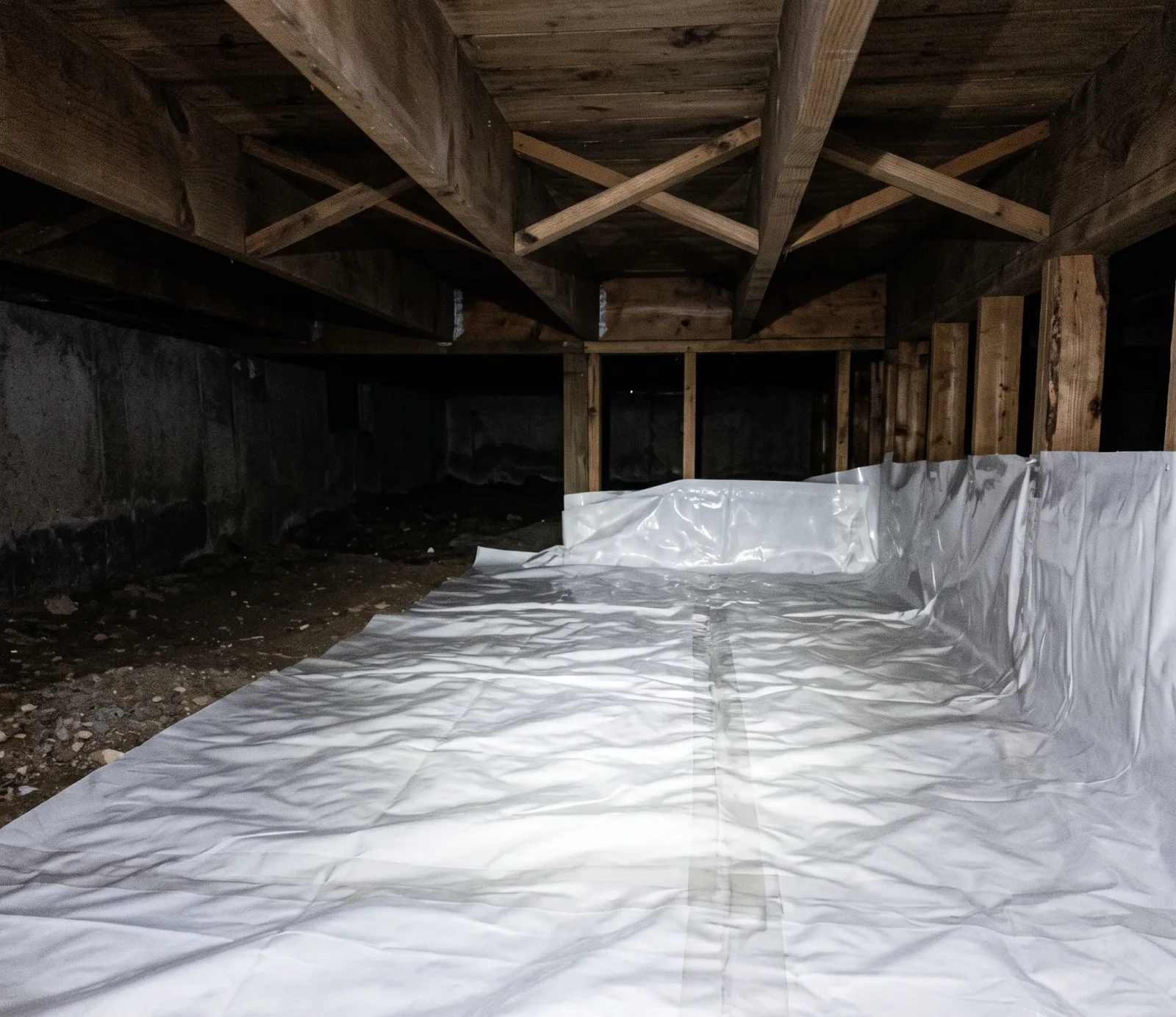
Why Clay Soil Movement Sends Water Into an Austin Foundation
Why expansive clay around an Austin slab or crawl space channels rain into a foundation instead of away from it.
Expansive clay under much of Austin shrinks in dry weather, opening a gap beside the foundation, then swells and traps rainwater against the wall once storms return, since clay drains far slower than sandy soil. That standing water creates hydrostatic pressure that can seep through cracks. Seepage can be corrected; a bowing or widening crack needs an engineer, not just drying.
How Clay Soil Moves Water Into Walls
East Austin sits on Blackland Prairie clay, the kind that swells when soaked and shrinks hard in a dry August. That shrinking opens a gap along the foundation edge, a thin trench the soil itself dug. The next storm off Lake Travis or a quick downpour doesn't spread out and soak in. It runs straight down that gap, right against the footing, faster than the same rain would move through sand.
Clay's problem is not how much water it takes in, it's how slow that water leaves. Sandy soil drains in hours; dense clay under an Austin slab can hold water against a wall for days. That standing water pushes sideways the whole time it sits there, and a wall built to hold up a house was never designed to also hold back a pond. The longer it stands, the more it pushes.
This sideways push has a name: hydrostatic pressure. It builds against a poured or block wall the same way water builds against a dam, quietly, until it finds the weakest seam. In an older pier-and-beam home near Hyde Park or Rosedale that seam might be a mortar joint. In a newer slab home closer to Mueller it's more often a cold joint where the footing met the wall pour.
Why the Gap Opens Up in a Dry Spell
Seepage and structural failure look similar from a phone flashlight and are not the same problem. Seepage is water finding an existing opening, a hairline crack, a poorly sealed pipe penetration, a gap where clay pulled away, and wicking through. It shows up as a damp patch, sometimes a chalky white residue, usually where the wall meets the floor. It does not usually change the shape of the wall itself.
Structural movement is different. It bows the wall, tilts it, or opens a crack that keeps growing between visits. A slab home in Travis Heights with a crack that runs diagonally from a corner, or a step crack in block near Windsor Park that widens season to season, is telling a different story than a wet patch that shows up only after rain. One is water finding a path. The other is the foundation itself losing its shape.
- Travis County clay expands with rain and contracts hard in dry stretches, opening a gap along the footing. The next storm funnels straight into that gap instead of running off.
- That gap does not close on its own before the next storm. A downpour off Loop 360 or through Mueller finds the path of least resistance and drops straight down beside the wall.
- Clay has almost no permeability once wet, so water that reaches the base of a foundation in Hyde Park or Cherrywood has nowhere to go and simply stands against the wall.
- Standing water against a block or poured wall builds hydrostatic pressure, pushing moisture through pores, mortar joints, and any hairline crack until it reaches the inside face.
- A seepage problem shows up as damp drywall, a musty smell, or a wet baseboard after rain, with no matching crack pattern or floor movement anywhere in the room.
- A structural problem shows stair-step cracks in brick, a door that no longer latches, or a floor sloping toward one corner of a Tarrytown or Allandale living room.
Hydrostatic Pressure Against Block and Poured Walls
That distinction matters because the two problems call for different people. A restoration crew can extract standing water, dry out a wet crawl space or slab edge, and treat the area for mold once materials are dry. What a restoration crew cannot do, honestly, is tell a homeowner whether a foundation needs piers, tell them what caused a wall to lean, or sign off on structural repair. That call belongs to a licensed structural engineer.
A homeowner in Cherrywood or Allandale looking at a crack that seems to be growing, not just staying wet, should get an engineer's opinion before spending money on repeated drying visits. The licensed pros a restoration site connects a homeowner with are set up to manage water and moisture, not to certify a foundation as sound. Saying so plainly upfront saves a homeowner from paying twice.
- Clay drains so slowly that rainwater sits against the wall for days under Central Texas humidity, building steady hydrostatic pressure the block or poured concrete has to resist the whole time.
- Gutters that dump at the corner of a house rather than several feet out concentrate water exactly where the clay gap opens first, especially on older Crestview and Highland lots.
- Pier-and-beam homes common in older parts of Clarksville and French Place face a different version of this: crawl-space soil holds moisture longer after a Colorado River area storm.
- A slab home near Onion Creek or Shoal Creek can see clay swelling push up on the slab from below at the same time seepage pushes in from the side, two separate mechanisms at once.
Seepage Problem Or Structural Problem, Compared
The clay problem in Austin is not evenly spread across the city. Blackland Prairie clay runs deep and expansive through East Austin, Windsor Park, Mueller, and out toward Manor and Pflugerville, with a plasticity that foundation trades treat as a real, ongoing concern. West of the Balcones fault line, closer to Northwest Hills or Barton Creek, shallow limestone sits under a thinner clay and caliche layer, which moves and drains differently than the deep clay to the east.
That east-west split explains why two Austin homes a few miles apart can have opposite seepage patterns after the same storm. A home over deep clay near Pecan Springs-Springdale may see water stand against a wall for days after rain lets up. A home over thinner soil and rock near Rollingwood may drain faster but deal with cracking where limestone doesn't compress evenly under a swelling clay cap.
| What You See | What It Looks Like | What It Means |
|---|---|---|
| Water appears after rain only | Damp wall, no new cracking | Likely seepage, not structural |
| Crack wider at top than bottom | Diagonal crack through block or brick | Foundation movement, call an engineer |
| Doors and windows sticking | Frame shifting out of square | Structural, not a drying job |
| Musty smell, no visible crack | Slow seepage through porous block | Seepage, address soil and grading |
| Water rises with the water table | Pressure pushing through a poured wall | Hydrostatic pressure, drainage fix needed |
What a Restoration Crew Can Actually Fix
Grading plays into all of this too. Clay that has pulled away from a foundation during a dry spell doesn't just sit there waiting, it becomes the easiest path for the next rain to follow down. A yard where dirt or mulch has built up against a wall over years, common in older lots near Clarksville or Bouldin Creek, holds water right where a foundation least wants it, worsening a gap the clay already opened.
Gutters and downspouts matter here more than most homeowners assume. A downspout dumping water two feet from a foundation wall is feeding the same gap the dry season created, storm after storm. Extending that discharge point further out, and correcting a grade that has settled toward the house rather than away from it, does more to prevent a seepage problem in South Austin or Oak Hill than any drying equipment applied after the fact.
When the Answer Is Really an Engineer
When water has already gotten in, the immediate job is getting it out and getting the affected materials measured with a moisture meter, not guessed at by touch. A wall can feel fine to the hand while the framing or slab edge behind it is still holding water days later. That measurement is what tells a homeowner in Zilker or Travis Heights whether a space is ready to close back up or needs more time.
If the water intrusion keeps recurring at the same spot after grading fixes and drainage work, that repetition itself is information. A seepage problem that has been corrected should stop coming back. A structural problem often does not, no matter how many times the water is dried, and at that point Austin homeowners need an engineer's assessment before another restoration visit.
Seepage Versus Structural, At A Glance
- Expansive clay under much of Austin swells when wet and shrinks when dry, a cycle that can open and close gaps beside a foundation wall each season.
- Clay's low permeability means water pools against a wall rather than draining through the soil, which is what drives hydrostatic pressure into block and poured walls.
- A seepage problem is a drainage and moisture issue; a structural problem involves cracking, movement, or settling that calls for a foundation engineer, not a drying crew.
- West Austin's shallow limestone bedrock behaves differently than East Austin's deep Blackland clay, so foundation moisture issues vary sharply by side of the city.
- Grading and gutter placement around a house change how much water reaches the clay gap beside a foundation, independent of the soil type itself.
- Pier-and-beam homes with a true crawl space face a different moisture path than slab homes, since water can sit under the floor rather than against a wall.
Frequently Asked Questions
Why does water show up by my foundation after rain?
Not always. A damp patch that shows up after rain and doesn't change the wall's shape is usually seepage, something a restoration crew can dry and treat. A crack that keeps widening, or a wall that bows or tilts, points to structural movement. That needs a licensed engineer's opinion, since drying the area repeatedly won't fix a foundation that has actually shifted.
How do I know if it's just seepage?
Austin's clay shrinks in dry weather, pulling away from the foundation wall. The next hard rain runs straight down that gap. Because the clay is nearly waterproof once saturated, that water has nowhere to drain and presses against the wall until it finds a crack or joint to pass through.
Is this a seepage problem or a foundation problem?
Seepage shows up as dampness, staining, or a musty smell with no matching crack or slope. A structural problem shows stair-step cracking, a door that sticks, or a floor that tilts. If you see the second set of signs, call a foundation engineer, not a drying company.
Can better drainage stop water from coming in?
No. Austin building permits and drainage rules come from the City of Austin Development Services Department, not a soil ordinance. A seepage fix like regrading or a French drain rarely needs a permit, but altering the slab itself usually does. Call DSD or 311 to confirm before digging.
My foundation has a crack — who fixes that?
If the wall is just damp with no cracking or movement, a restoration crew can dry it and address drainage. If you see cracking, an uneven floor, or a stuck door, get a foundation engineer's opinion first. Restoration work on a moving foundation won't hold.
Not Sure If It's Seepage Or Structural?
If you're seeing water track along a wall after rain near Zilker or South Lamar, the licensed pros we connect you with can look at drying and drainage, and tell you plainly if it's a job for a foundation engineer instead.
Call (512) 764-6583