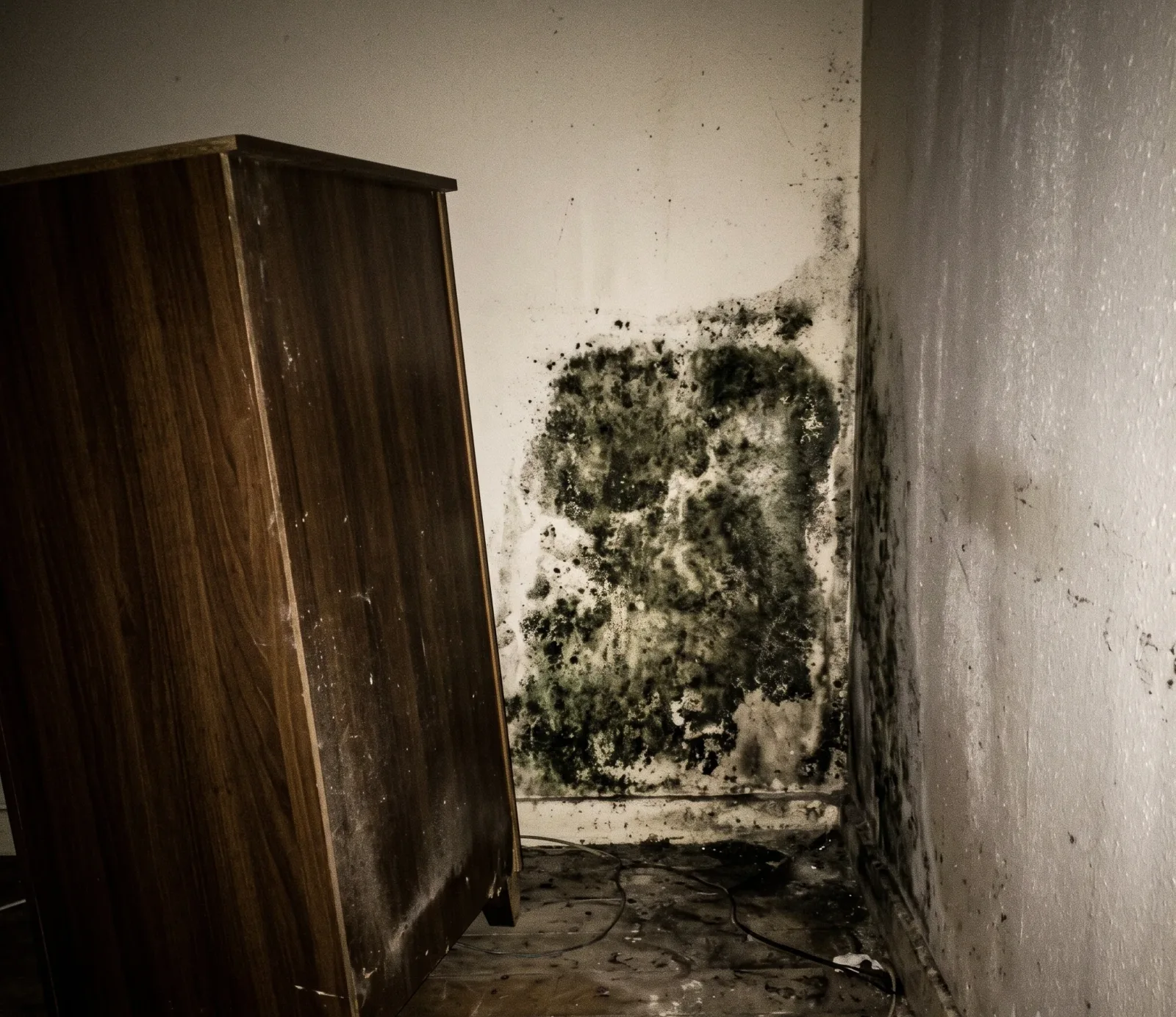
Why Mold Grows Faster in TX Homes
Central Texas humidity doesn't take a season off, and neither does indoor mold growth.
Austin's humidity swings, not a single flood, drive most indoor mold. Spores already present in the air need only sustained moisture, from condensation on an hvac coil, vapor moving through walls, or a poorly vented bathroom, to begin colonizing organic material like drywall and wood within 24 to 48 hours of staying wet.
Why Central Texas Humidity Feeds Mold
Austin's humidity is not steady the way a coastal city's is. Central Texas humidity spikes hard after rain, then drops as the sun returns, and mold does not need the wet season to survive that swing. Relative humidity above 60 percent indoors for extended stretches is enough to let spores already present in the air settle onto a surface and start colonization, no flood required.
Central Texas humidity gives spores a foothold anywhere moisture lingers, not just where water once pooled. A humid attic over Cherrywood, a slow leak under a Hyde Park kitchen sink, or a poorly sealed crawl space in Travis Heights can each turn into a colonization site within days. Once established, growth spreads through paper facing, subfloor, and any cellulose it touches, feeding on the material itself.
Condensation is the quieter driver. When warm, humid Austin air meets a cold surface, an hvac coil, a poorly insulated duct, a cold water line, water forms on that surface even with no leak anywhere. That thin film is enough moisture for spores nearby to begin growing, which is why homes with no known water damage still turn up mold near supply registers or attic ductwork.
How Fast a Damp Spot Turns Into Colonization
Vapor pressure explains why humid air pushes moisture into a house even through walls that look intact. Water vapor moves from areas of higher concentration to lower, and Austin's outdoor humidity after a rain event is often higher than the conditioned air inside, so vapor drives inward through porous material until it hits a cooler layer and condenses. Slab foundation homes are not immune; vapor can move up through the slab itself.
An air handler closet is a common overlooked source. Warm, moist air infiltrating around a poorly sealed door or duct boot meets the cold surfaces of the unit and its lines, and condensation collects in a spot nobody checks routinely. Add dust on the coil as organic material and a biofilm can start inside the unit itself, which is one reason musty odors sometimes trace back to the air handler rather than a wall or ceiling.
- Warm, damp air condensing on a cool HVAC coil or duct run keeps a steady film of moisture on metal and insulation, feeding growth long after any storm or leak has dried.
- Bathroom exhaust fans in older Hyde Park and Crestview houses that dump air into the attic instead of outside push humid air straight into insulation and framing that never gets a chance to dry.
- Crawl spaces under pier-and-beam homes near Travis Heights and Rosedale hold ground moisture against joists and subfloor when a vapor barrier is torn, missing, or was never installed.
- Organic material left wet, cardboard, drywall paper, wood trim, gives spores a food source once moisture arrives, so a damp closet or garage in Cherrywood can turn into active colonization within days.
- Slab leaks common in homes with expansive clay movement near South Lamar keep carpet pad and baseboards wet from underneath, often for weeks before a stain or odor gives it away.
- Poor attic ventilation over West Lake Hills and Barton Hills homes traps summer heat and moisture together, raising vapor pressure inside the roof deck and slowing any natural drying between rain events.
Condensation Points Hiding Inside the House
Colonization speed depends on the material as much as the moisture. Paper-faced drywall and wood absorb and hold water readily, so they cross the growth threshold faster than tile or sealed concrete. A slab foundation home in South Austin or Hyde Park with an older bathroom exhaust that vents poorly will show growth on the drywall around that fan well before anywhere else in the house, because that surface stays damp longest after every shower.
Once established, mold does not stay put. It produces spores continuously as it grows, and normal airflow from an hvac system can carry them well beyond the original wet spot. This is part of why indoor air quality complaints, a musty smell in a bedroom far from any bathroom or kitchen, often trace back to duct-borne spread rather than a separate moisture source in that room.
- Find and fix the moisture source first. Drying a room without stopping the leak, the condensation, or the drainage problem behind it just means the same colonization returns within a few weeks.
- Run exhaust fans and open windows when weather allows, especially in Mueller and North Loop homes with limited cross-ventilation, to keep indoor humidity from climbing after cooking or showers.
- Watch for a musty smell before you see staining. Off-gassing from active microbial growth in a wall cavity near Rosewood or Govalle often shows up in the air before it shows up on drywall.
- A biofilm layer inside a condensate line or drain pan holds moisture and odor even after a coil is cleaned, so a slow-draining AC line in a Circle C Ranch attic keeps feeding growth quietly.
Where Moisture Sources Collect By Season
Attic conditions in Austin add a specific twist. Attics run hot most of the year, but ductwork carrying cooled air creates cold surfaces inside a very humid space, especially where duct insulation has degraded or a connection has loosened. Condensation dripping from a duct joint can soak insulation and roof decking slowly enough that nobody notices until a stain appears on a ceiling in Crestview or Windsor Park.
Bathrooms without functioning exhaust fans, or with fans vented into the attic instead of outside, keep relative humidity elevated in one room for hours after every shower. That sustained humidity, not a single wet event, is what pushes grout lines, cabinet backs, and ceiling drywall into the range where colonization becomes likely rather than possible, in homes across neighborhoods like Mueller and Cherrywood built in different decades with different venting standards.
| Season | Moisture Source | Where It Shows Up |
|---|---|---|
| May through October | High outdoor relative humidity | HVAC coil condensation, closet walls |
| Post flash flood | Standing surface water at grade | Slab edges, baseboards, drywall |
| Cedar fever season | Temperature swings, closed windows | Bathroom ceilings, window frames |
| Deep summer heat | Air handler running near constantly | Attic ductwork, supply vents |
| After a slab leak | Clay soil movement cracking pipe joints | Carpet pad, wall cavities near floor |
Building Habits That Starve Mold of Moisture
Homeowners near Shoal Creek or Barton Creek Greenbelt often assume a dry-looking wall means a dry cavity, but vapor pressure moves water through materials long before staining shows. Checking behind baseboards in Rosedale or Allandale bungalows after any leak matters more than checking the surface. Catching that hidden dampness early is what keeps a single wet wall from becoming a slower, harder problem months later.
Off-gassing from mold colonies, the musty smell people notice before they see anything, comes from microbial volatile organic compounds released as the growth spreads. That smell is a signal worth acting on even without visible staining, because by the time growth is visible on a wall in a house near Barton Springs Pool or South Congress, the colonization behind that surface is usually further along than it looks.
Reading the Air Before It Becomes a Problem
Any moisture source left unaddressed, a slow slab leak, a leaking supply line in a wall, a poorly draining condensate pan, restarts the same process regardless of season. Austin's dry stretches slow visible growth but do not undo colonization that has already taken hold in wet insulation or damp wood framing, which is why a problem that seems to fade in August often reappears once fall rain returns.
Because growth conditions here are tied to humidity and condensation rather than a single flood event, monitoring relative humidity indoors year-round, not just after a storm, is the most reliable way an Austin homeowner catches a moisture source early. A hygrometer reading that consistently sits above 60 percent in a closet, attic, or air handler room is worth investigating before any smell or stain shows up.
What Drives Growth Here
- Austin's average annual rainfall runs about 35.5 inches, with May, October, and June typically the wettest, keeping indoor humidity elevated across much of the year.
- Central Texas humidity keeps indoor relative humidity elevated most months, so drying a wet material fast matters more here than the calendar date.
- Older pier-and-beam homes with true crawl spaces, common in hillier parts of Travis County, face recurring moisture issues that slab homes elsewhere in the city do not.
- EPA sets no numeric clearance standard for mold; a proper check confirms no visible growth, no musty odor, and no remaining signs of water damage.
- Shoal Creek's watershed has roughly 53% impervious cover per state regulators, one reason runoff near it rises fast and can leave nearby structures damp.
- TDLR licenses mold remediation companies in Texas; the state does not license general restoration contractors, who work instead under City of Austin permits.
Frequently Asked Questions
Does mold always mean there was a leak?
No. Mold in Austin homes commonly starts from condensation on cold surfaces like an hvac coil or duct joint, or from humid air pushing through walls, not from standing water. A bathroom with a weak exhaust fan or an attic with degraded duct insulation can sustain enough moisture for growth without any leak ever occurring.
Can Austin's climate cause mold even in winter?
Austin rarely sees relative humidity low enough to stop growth outright. Even in drier months, a slab leak, a leaking supply line, or a poorly draining bathroom keeps materials wet enough for colonization to continue behind walls and under flooring most of the year.
Is my AC supposed to stop mold?
Not on its own. An HVAC coil that stays wet, ductwork sweating in a hot attic, or a system sized wrong for the house can add moisture faster than it removes it. Undersized humidity control lets condensation collect on cool surfaces even with the system running.
Which rooms in my house are most at risk?
Attics above insulation, crawl spaces under pier-and-beam homes in Clarksville and Travis Heights, and cabinets under sinks near West Campus and Hyde Park units trap moist air against wood and drywall with little airflow to carry it back out.
What can I do to lower indoor humidity?
Ventilate bathrooms to the outside, not into the attic. Keep gutters clear near Mueller and Windsor Park so runoff doesn't sit against the slab. Fix drips fast, and run a dehumidifier in any room that stays humid after a shower or a load of laundry.
Smelling mold? Get it checked now.
Seeing dark spots on a ceiling or smelling something musty in a closet near Oak Hill or Allandale? Connect with a TDLR-licensed mold remediation pro who can find the moisture source and check indoor air quality.
Call (512) 764-6583