Dark spotting along the shower grout
Grout stays porous, so dark spotting there means moisture is sitting in the material itself, not just on top of it. Wiping the tile clean will not solve what has already taken hold underneath.
Austin bathrooms run warm and humid most of the year, but cedar fever season in late winter often coincides with windows staying shut and less air moving through the house, giving trapped shower humidity fewer places to go.
Bathroom mold in Austin forms when shower humidity outpaces a weak exhaust fan, common in older homes around Hyde Park or Clarksville. Texas licenses mold assessment and mold remediation as separate credentials through TDLR, and a company generally cannot hold both for the same project. An assessor documents the problem first; a separate remediator handles removal.
Austin's slab foundations react to soil, not neighborhood lines. Clay under Rosedale or Cherrywood swells after rain and shrinks in August drought, and that movement opens cracks a slab leak slips through unnoticed for weeks.
Grout stays porous, so dark spotting there means moisture is sitting in the material itself, not just on top of it. Wiping the tile clean will not solve what has already taken hold underneath.
A musty smell returning right after cleaning tells you the surface was treated but the source above the tub or inside the wall was not. A mold assessor can find where moisture is actually collecting.
Paint that peels near the shower wall usually means humidity behind it has stayed high long enough to break the bond between paint and drywall. That drywall is now an affected material worth checking further.
Soft or bubbling drywall by the vanity often points to a slow supply line or drain leak feeding the wall cavity from behind. Affected material like this rarely dries out on its own before growth spreads.
Black flecks above the shower with no obvious leak nearby can mean growth has spread across the ceiling surface itself rather than starting fresh. Someone qualified should check how far it runs before anyone paints over it.
Austin bathrooms run high humidity every time someone showers, and the region's warm, humid stretch keeps ambient moisture elevated between uses too, so drywall near Cherrywood or Rosedale gets little chance to fully dry.
Slab foundations common across Austin mean a bathroom leak has no basement to drain toward, so water and moisture intrusion travel sideways into cabinet bases and baseboards in homes near Travis Heights or Brentwood instead.
Austin splits along the Balcones Escarpment near I-35: limestone shelf to the west, soft clay to the east, and each side moves water differently after a downpour. Zilker and Bouldin Creek sit low enough that runoff lingers under slab foundations long after the rain stops.
Homeowners often mistake hard water film or soap residue on tile for growth. That residue is chalky and lifts off with a scrub; microbial growth sits in the material and stays put. A homeowner scrubs the tile, it looks gone, and the same dark patch shows up again within a week in the same corner behind the tub surround. That return pattern usually means mold has reached into porous material like grout backing or drywall, not just the surface. Mildew stays on top of a surface and wipes away for good; recurring growth in the same spot points to moisture intrusion still active behind it.
A mold assessor inspects the bathroom, measures relative humidity, and identifies which affected materials are involved before any wall gets opened. Their report sets the scope for the job: what porous material needs removal, what non-porous surfaces like tile just need cleaning, and whether the growth has moved past the surface into drywall or subfloor around a Mueller or South Lamar bathroom.
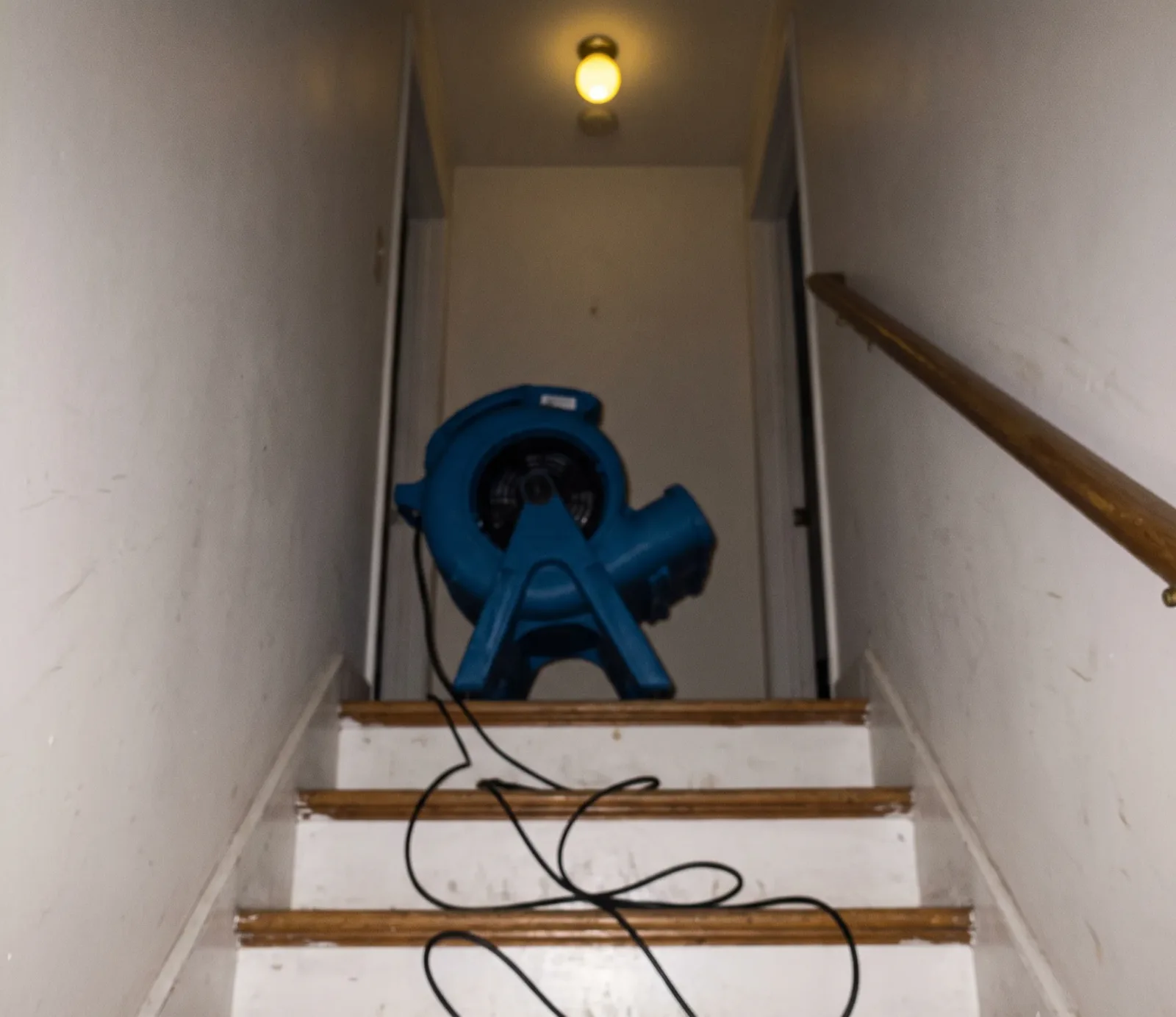
For a bathroom, that usually means cutting out soaked drywall behind the tub surround, pulling wet baseboard, and lifting tile or subfloor if moisture tracked underneath. Non-porous surfaces like tile and grout get cleaned rather than replaced. A physical barrier seals the doorway while the room dries, and equipment runs until moisture readings inside the wall cavity return to a dry baseline before anything gets closed back up.
Flash flooding along Onion Creek and Shoal Creek can push water into homes within an hour of a Hill Country downpour, well before Central Texas humidity ever becomes the problem. The clay underneath keeps that water from draining away once it arrives.
| Who Shows Up | Damage We Address |
|---|---|
| A slab crack in Tarrytown or Hyde Park does not announce itself. Clay soil under the foundation shifts with rain, and water finds the gap weeks before a stain shows on the carpet or baseboard inside. | Onion Creek and Shoal Creek rise fast after Hill Country storms, and homes near Mueller or East Cesar Chavez can see water at the door within an hour. Slab foundations mean that water spreads across floors immediately, with no basement to slow it down first. |
| Austin's flood risk isn't a coastline problem, it's a grading problem. Water crossing Shoal Creek or Waller Creek during Hill Country storms backs into low-lying yards near Travis Heights and Mueller before it ever reaches a wall. Add a post-tension slab losing its seal, and moisture gets inside without a single pipe failing. | A downpour that swells Boggy Creek or the Colorado River can trap runoff against a slab edge faster than gutters carry it away. Homes closer to Montopolis or Windsor Park feel this first, since grading there sends water toward the foundation instead of past it. |
| Clay soil under Travis Heights shifts through wet and dry spells, opening gaps beneath post-tension slabs that plumbing leaks slip through unnoticed. Winter adds a second threat: pipes near Waller Creek can split open once temperatures drop hard and fast. | Waller Creek and Shoal Creek both cross Austin's central grid, and a fast summer storm can push either one over its banks near Hyde Park or Allandale within an hour. Slab foundations sit low to that grade, so runoff finds a door before anyone gets home. |
Texas splits bathroom mold work between two credentials. One permits inspecting the room and setting down what has to happen; the other permits stripping out the affected material and drying the space. A single firm generally cannot use both on one bathroom, and the reason is straightforward: the party deciding how much work is needed should not be the party invoicing for it. Minor jobs sit outside the rule, as does an owner working on the home they live in. Ask which of the two credentials a company holds before it quotes a Travis County bathroom.
Left alone, bathroom mold moves past the grout and into the drywall behind a tub surround, then into the paint on the ceiling above the shower. In older Austin homes near Hyde Park or Travis Heights, it can reach subfloor if water has been getting past worn caulk for months. Porous material like drywall and subfloor cannot just be wiped clean once growth sets in; the affected section has to come out. Non-porous tile and tub surrounds usually clean up, but the framing and drywall behind them often do not.
Wiping a small mold patch off tile or a shower curtain with regular bathroom cleaner is fine for surface growth. It won't touch anything that has reached porous material like drywall, grout backing, or the ceiling above the shower. If the same spot keeps returning in a Travis Heights or Crestview bathroom no matter how often it's cleaned, that's usually a sign the moisture source, not just the visible mold, needs a licensed look.
A bathroom with ongoing moisture intrusion can affect the air quality of that room and nearby hallways, and some people notice symptoms when they spend time near active microbial growth. This page does not diagnose anything or promise a health outcome from cleaning it up. What matters to an Austin homeowner is drying the space and removing affected materials before growth spreads past the tile line into drywall or cabinetry. A shared bathroom used daily by a Hyde Park or Mueller household gives moisture less time to fully dry between uses, which is a building condition worth fixing regardless of how anyone in the house feels.
A cracked slab near Mueller or Hyde Park can push water under the flooring for days unnoticed. Call (512) 764-6583 to reach a licensed pro near you.Water that sits for days near Zilker or Hyde Park can turn a drying job into a mold job. Once growth starts, TDLR-licensed mold remediation is priced apart from extraction and drying. Ask for both numbers in writing before the licensed pros in Austin start work. pricing guide, and the service that handles this is Mold Remediation.
Crawl Space Mold. Crawl space mold in Austin grows where ground moisture and blocked vents keep humidity trapped against floor joists and insulation.
Mold Guide. Closet and cabinet mold is microbial growth that forms in enclosed, poorly ventilated storage spaces, usually from a hidden leak or trapped humidity.
Austin Mold Assessment. Black mold on drywall or framing means moisture sat somewhere in the house long enough for growth to take hold, usually weeks rather than days.
Not in Texas. The state issues a mold assessor license and a mold remediator license as separate credentials, and one company generally can't hold and use both on the same bathroom job, aside from narrow exemptions for minor work or a property owner's own home.
A bathroom with a weak or missing exhaust fan holds humidity for hours after every shower, and Austin's warm, humid stretches through the year keep that moisture from drying out fully between uses, especially in older homes near Hyde Park or Clarksville with fans not sized for the room.
Bathrooms trap steam from every shower with little airflow to clear it, so a tub surround, grout line, or ceiling patch above the shower can stay damp long after the water shuts off. In older Austin houses without a working exhaust fan, that moisture has nowhere to go, and growth can start on drywall paper or grout within a day or two of standing dampness.
It means someone besides the crew that did the work checks the bathroom afterward, confirming affected materials were removed and the space dried before it gets closed up again. Texas rules do not fix one required method for this step. Ask the remediation company directly whether a separate check, and any sampling, is included in your bathroom job's scope.
A hard freeze like Uri catches slab homes and pier-and-beam homes differently. Exposed pipes under a raised house near Clarksville or Tarrytown freeze first, while a slab home's break often stays hidden until water shows up along a baseboard days later.
Call (512) 764-6583