Flooring feels soft near a flooded room
Softness after a flood usually means water sat under that flooring long enough to soak the subfloor. Pulling a section back shows how deep the moisture went before flooring goes back down.
Flooding around Austin tends to follow flash flood alley downpours or Hill Country storms that overwhelm drainage faster than a home can dry, giving growth a head start before anyone notices.
Post-flood mold shows up in Austin homes days after flash flooding off Waller Creek or Boggy Creek leaves carpet, drywall, or baseboards wet. A mold assessor inspects and writes the scope; a mold remediator carries out the removal, since Texas licenses these as two distinct roles under TDLR. Homeowners shouldn't expect one company licensed to do both on the same address.
Slab-on-grade is the default from Circle C Ranch to Avery Ranch, but pier-and-beam homes with real crawl spaces still stand in older parts of town like Clarksville. Each foundation type traps water differently once it gets in.
Softness after a flood usually means water sat under that flooring long enough to soak the subfloor. Pulling a section back shows how deep the moisture went before flooring goes back down.
Swollen baseboards mean floodwater wicked into the wood and stayed after the visible water was gone. That trapped dampness is exactly where growth tends to start once drying stops too soon.
A musty smell that lingers after cleanup usually points to growth starting inside walls or flooring that looked dry on the surface but never fully released moisture from the flood.
A stain line a few inches up drywall marks how high floodwater rose before it receded. Everything below that line likely stayed wet longer than it looked from outside.
Air that stays damp even with the AC running can mean the HVAC system is circulating moisture pulled from flooded materials instead of drying the room the way it normally would.
Austin homes sit mostly on slab foundations, so floodwater from a burst pipe or a creek overflow near Williamson Creek has nowhere to drain but sideways, into baseboards and drywall, instead of down into a basement most houses don't have.
Flash flood alley funnels heavy rain fast, and older homes near Shoal Creek or Boggy Creek can take on water through low doors or window wells. Once that water's inside, ductwork and wall cavities trap moisture long after the street outside has drained.
A hard freeze catches Austin plumbing off guard more than any flood does. Pipes near Mueller or Windsor Park split open when temperatures drop fast, and nobody notices until a slab foundation is already sitting in standing water.
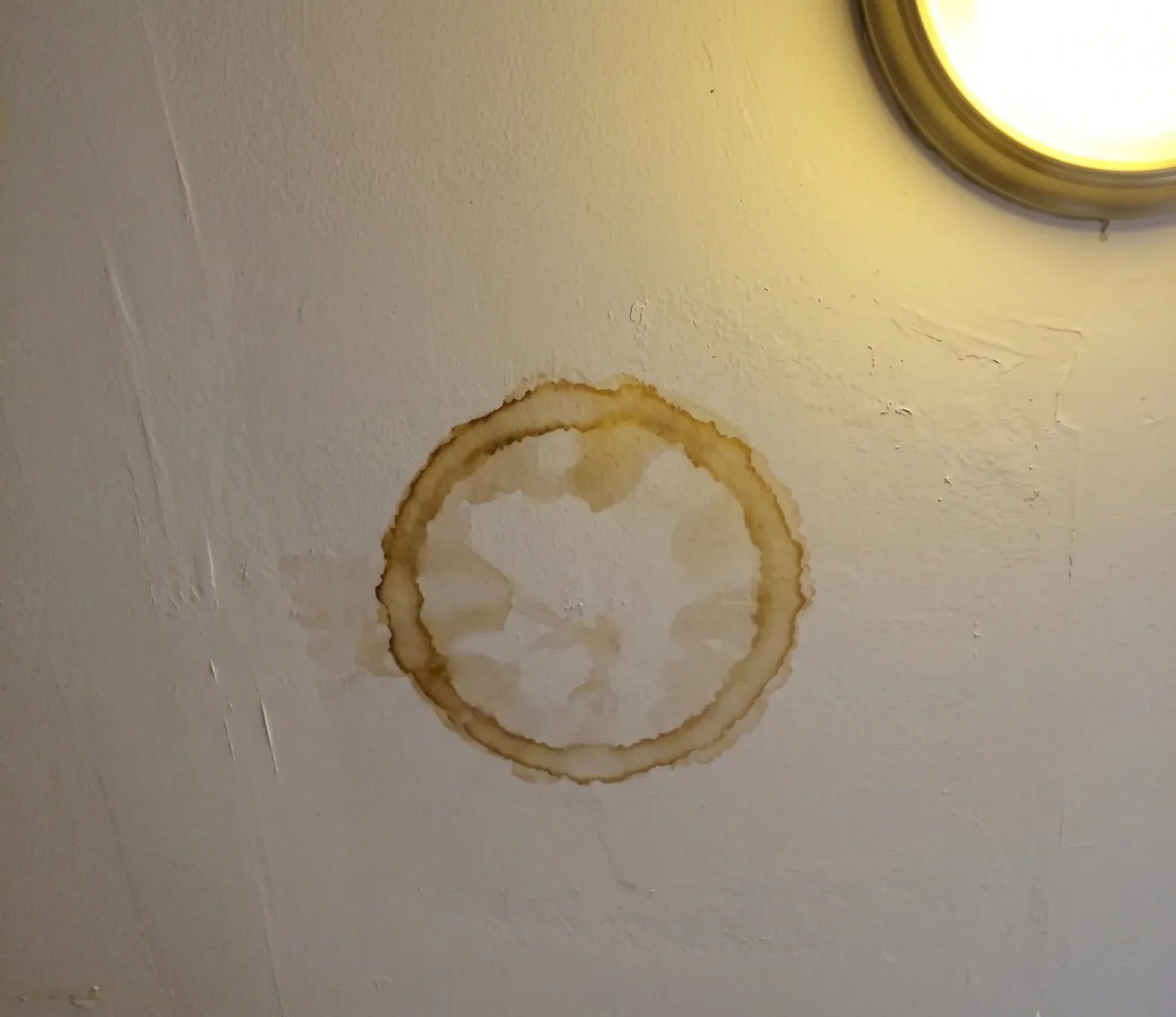
People sometimes mistake this for a leftover water stain from the flood itself. Unlike a stain that stops changing, active growth after a flood keeps spreading as long as materials stay damp. Flood-driven growth gets mistaken for ordinary surface mildew because both can leave dark spotting and a musty smell near baseboards. The tell is depth: surface mildew wipes off drywall paint, while flood-soaked material stays damp underneath no matter how clean the top looks. A moisture meter on the wall, not a glance, is what actually separates the two.
A mold assessor examines flood-affected rooms, checks moisture levels in walls and flooring, and writes up which materials need to come out. In Austin, that assessment has to happen under a separate license from whoever removes anything, since Texas keeps those two roles apart by law.
Once floors near Barton Springs Pool or along Shoal Creek take on floodwater, soaked baseboards, carpet pad, and laminate usually can't be saved. A remediator strips out what's ruined, opens up the subfloor, and runs equipment until moisture readings drop. Framing and studs get treated in place if they're salvageable rather than replaced outright.
Older pier-and-beam homes near Clarksville and North Loop have a true crawl space, so a plumbing leak shows up as damp wood and a musty smell underfoot. Newer slab homes elsewhere give no such warning; the water just moves under the concrete unseen.
| How Fast They Arrive | First Steps |
|---|---|
| Flash flood alley runs through low ground near Onion Creek and Walnut Creek, where water rises fast enough to catch homeowners off guard. Waiting even a day after the water recedes lets it climb higher into drywall. | Slab foundations dominate Austin, but the ground under them isn't uniform. West of I-35 near the Balcones fault, shallow limestone sits close to the surface. East toward Govalle and Cherrywood, clay soil shifts with rain, stressing slabs until cracks let water climb in from below. |
| A hard freeze like Uri catches Austin pipes that were never built for it. A line bursts in an attic near Crestview or Allandale, and by morning water has traveled through the ceiling below. IICRC-certified pros track it back before drywall gets cut open. | Older pier-and-beam homes near Clarksville or Rosedale have a real crawl space, while newer slab builds in Circle C Ranch or Mueller don't. That difference changes where water pools and how the licensed pros we connect you with plan the drying. |
| Austin's slab foundations sit closer to the ground than a basement ever would, so water from a stalled storm has less distance to travel. Near Onion Creek or Shoal Creek, runoff reaches the slab edge fast, and a cracked expansion joint lets it in before anyone checks the yard. | Onion Creek has flooded parts of South Austin hard enough to reach homes well outside any marked floodplain map. A pier-and-beam house near Travis Heights holds water in the crawl space long after a slab house down the street has already dried out. |
After a flood the licensing split still applies, and it matters more than usual because the affected area is larger. One Texas license covers inspecting the property and setting out what has to go; a separate one covers removing it and drying the structure. The same company generally cannot use both on the same job. Small-scale work, and an owner working on their own property, sit outside the requirement. On a flooded East Austin or Windsor Park house, ask which license each company holds and who is doing the final check, before the first wall is opened.
Post-flood water doesn't stop at the surface. It wicks up drywall, swells baseboards, and settles into subfloor and framing where nobody's looking. A day of standing water in an Austin home near Shoal Creek or Williamson Creek can turn into a week of hidden dampness once furniture and boxes get shoved back against damp walls. Left that way, affected materials keep feeding growth even after carpets look dry on top. Drywall loses structural integrity, wood trim cups, and framing can stay wet long enough that drying alone won't fix it anymore.
A homeowner can pull out soaked carpet pad, prop up furniture, and point box fans at open rooms while waiting on an inspection. Bleach on visible spots does little against growth that's already inside porous material. Anything past a small, contained area, especially where floodwater touched drywall or insulation, needs someone who can measure how far moisture intrusion actually traveled before more gets opened up.
Flooding pushes water into places that don't dry on their own schedule: behind baseboards, under cabinets, inside wall cavities near an air handler. Once relative humidity in those spaces stays elevated for more than a day or two, microbial growth can start on drywall paper, wood trim, and insulation. This isn't a medical claim, just a moisture fact. Indoor air quality can shift as growth spreads, and some people report scratchy throats or stuffy noses in a home that's been sitting damp. Whether that happens depends on the household, not the flood itself. Austin's summer humidity keeps drying times slow even after the water recedes.
A slab crack near Shoal Creek or Waller Creek won't wait for business hours. Reach out now and a licensed pro can start today.Water that sits for days near Zilker or Hyde Park can turn a drying job into a mold job. Once growth starts, TDLR-licensed mold remediation is priced apart from extraction and drying. Ask for both numbers in writing before the licensed pros in Austin start work. pricing guide, and the service that handles this is Mold Remediation.
Austin Mold Assessment. Black mold on drywall or framing means moisture sat somewhere in the house long enough for growth to take hold, usually weeks rather than days.
Crawl Space Mold. Crawl space mold in Austin grows where ground moisture and blocked vents keep humidity trapped against floor joists and insulation.
Mold Guide. Closet and cabinet mold is microbial growth that forms in enclosed, poorly ventilated storage spaces, usually from a hidden leak or trapped humidity.
No. TDLR issues separate credentials for checking mold and for clearing it out, so an East Austin or Windsor Park homeowner should expect one licensed party to write findings and a different licensed party to handle the cleanup, not one outfit doing both under a single roof.
Once floodwater has soaked drywall, insulation, or subfloor in an Austin home, that's past a DIY scope. A licensed mold assessor needs to check how far moisture traveled behind walls before anyone starts tearing anything out, since flood-soaked cavities often stay wet longer than they look.
Dark spotting spreading up a wall, a musty smell that lingers after carpets dry, or drywall that feels soft near the floodline. In homes along Williamson Creek or Boggy Creek that took on water, growth often shows up behind furniture first, in the spots that dried slowest.
There's no fixed number in Texas law. Drying time after a flood depends on how much water got in, how long it sat, and how many materials the remediator has to remove before framing can dry out completely under Austin's summer humidity.
Flash flooding from Hill Country storms moves fast along Onion Creek, Williamson Creek, and Waller Creek, and water can enter a home at grade before anyone gets a warning. That surface intrusion is the real risk here, not a coastal storm system.
Call (512) 764-6583