Austin homes rarely flood from a rising basement, because most sit on a slab. The water that damages a slab-foundation house usually starts at roof level and travels down a wall before it ever reaches the ground. A gutter and downspout system is the first thing standing between a Hill Country storm and that wall, and it works or fails months before anyone in Tarrytown or Travis Heights notices a problem inside.
What A Clogged Gutter Does
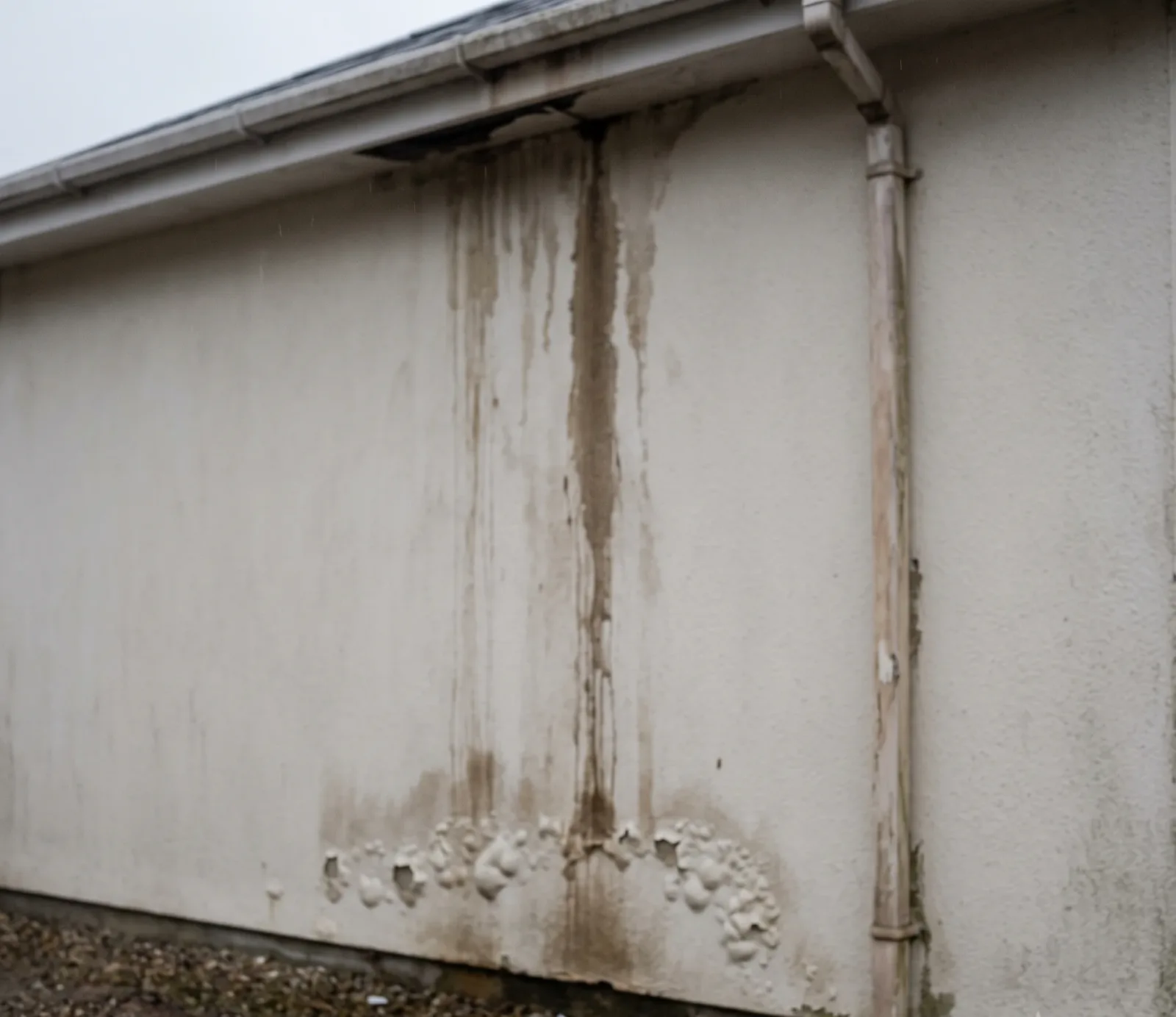
When leaves and roof grit pack a gutter tight, rainwater has nowhere to travel but over the top edge, right where the fascia meets the roofline. In Austin's downpours, that repeated overflow keeps the fascia board damp far longer than a working gutter ever would, and paint failure or soft wood usually shows up first at the corners near the downspout inlet.
Why A Few Feet Matter
A short downspout is only half the job. If the outlet sits a foot or so off the house with no extension or splash block, water lands right back against the foundation wall on the next storm. Austin's clay-heavy soil sheds water slowly, so that puddle lingers, and slab foundations do not tolerate standing moisture pressed against them for days at a time.
Tree Canopy And Gutter Upkeep
Older tree canopy in Hyde Park, Clarksville, and Allandale sheds into gutters through most of the year, not only in fall. Live oaks and other hardwoods common to these neighborhoods drop leaves, catkins, and small branches that pack into a gutter channel and hold water instead of letting it pass. A gutter guard cuts down on that buildup but does not remove the need to check the system after a hard wind.
Ground-Level Signs To Check
After a heavy rain, check the ground where each downspout empties. A washed-out trench in the mulch, exposed roots, or a small crater in the soil means water is concentrating there instead of spreading out, which is exactly what an extension or splash block is meant to prevent. This kind of erosion near a foundation wall tends to get worse with every storm, not better on its own.
Tracing The Roof Drainage Path
Trace every downspout from the roof edge to the point where the water actually leaves the system. Some empty onto a splash block, some tie into underground piping, and some just stop above bare dirt. What matters is where that last drop lands, because a downspout doing everything right up to that point still fails the house if the final few feet dump water against the wall.
When Grading Slopes The Wrong Way
Grading works against a house when the ground near the foundation slopes toward the wall instead of away from it. Combine that with a short downspout and roof runoff has nowhere to go but back at the slab. This shows up often in older sections of East Austin and Govalle, where decades of settling can flatten or reverse the slope a builder originally cut.
Fascia And Soffit Warning Signs
Watch for hangers pulling loose, a gutter run sagging in the middle, or a stained band on the soffit right below the seams. Each of these points to water sitting in the trough longer than it should, usually because a clog upstream is holding it there. Catching this before the next Hill Country storm rolls through is cheaper than replacing soffit boards later.
When A French Drain Applies
Gutters only manage what falls on the roof. They do nothing for water that reaches the yard by another route, like runoff crossing a neighbor's lot or a low spot that collects after Shoal Creek or a nearby drainage swale backs up in a downpour. Grading the soil away from the house solves a separate problem from clearing a downspout, and confusing the two leaves one of them unaddressed.
A Seasonal Gutter Routine
Clear gutters at least twice a year in Austin, once before the spring rains in May and again once the fall leaf drop settles, with an extra check after any storm strong enough to strip branches. Lots shaded by live oaks, common in older parts of town near Hyde Park or Travis Heights, tend to clog faster and are worth a mid-season look as well.
What This Does Not Fix
Keeping gutters clear and downspouts extended stops roof runoff from becoming a foundation problem, but it will not help water that has already worked its way past a roof covering or through a crack that opened under a slab. Those are different failures with different fixes, and treating a downspout as the cure for either one wastes the time better spent finding where the water actually got in.
What This Routine Buys You
A working gutter system costs mostly attention, not money. Clear gutters, downspouts that carry water well past the wall, and grading that slopes away from the slab handle most of what a Central Texas storm throws at a roofline. That routine will not fix a cracked slab or a creek overflow, but it removes one of the more common and most avoidable paths water takes into an Austin home.
Dealing with this in your home?
Austin's clay soil expands after rain and pulls back tight in a hard freeze, so a post-tension slab near Zilker can crack years after the pour. Add Hill Country storms that dump inches in an hour, and Shoal Creek pushes water toward homes that never flooded before.