After a flash flood off Shoal Creek or a burst pipe from a hard freeze, an Austin homeowner wants a real answer, not a guess. Materials look dry long before they measure dry. Moisture meters give a number instead of a feeling. Two kinds exist, pin and pinless, and they measure moisture content differently, which matters once drying equipment goes in and a technician needs proof before calling a room finished.
Pin Versus Pinless Tools
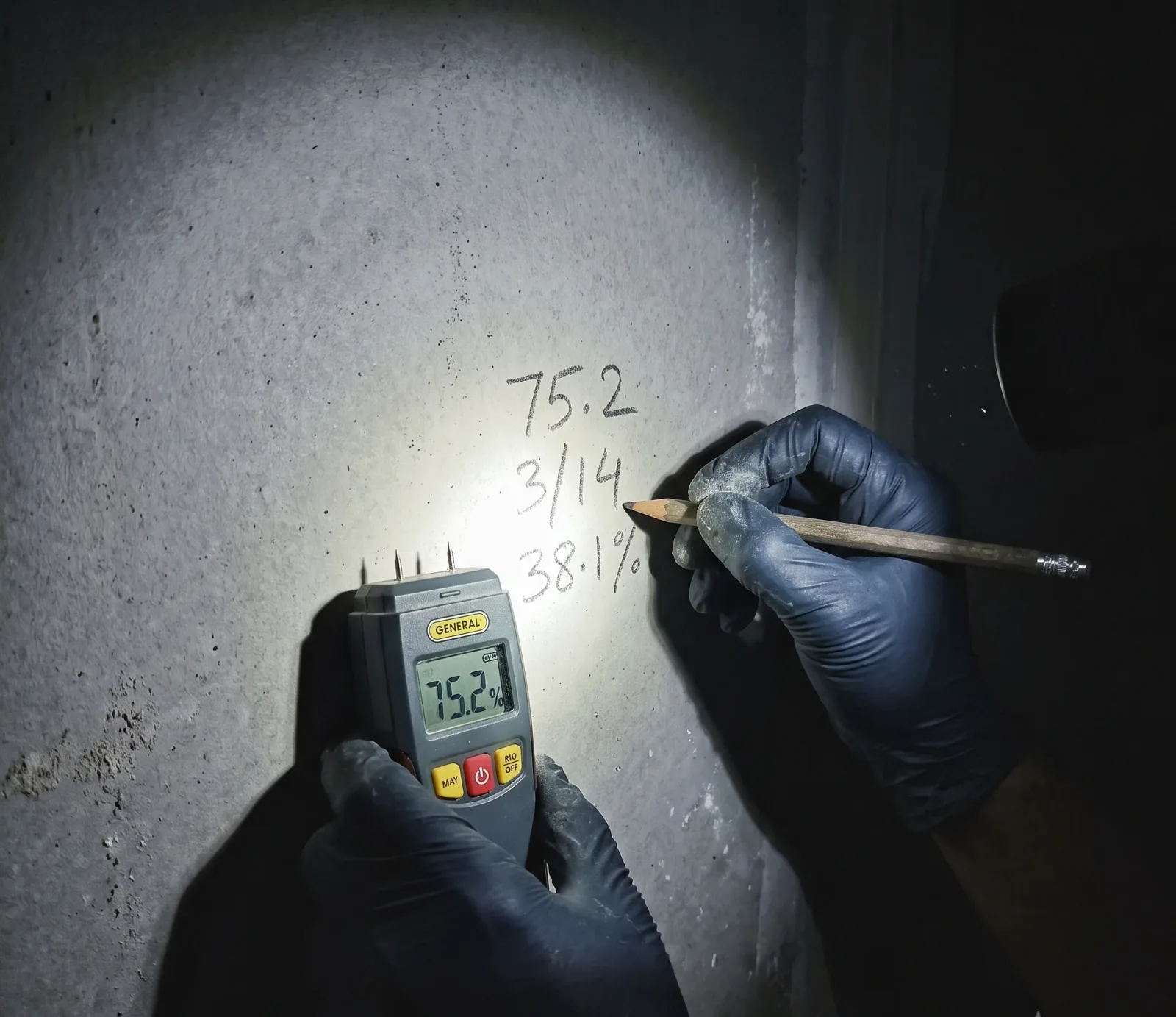
A pin meter has two small probes that get pushed into the material, reading resistance between them to estimate moisture content at that depth. A pinless meter uses electromagnetic signals through a flat sensor pad, scanning below the surface without leaving a mark. Pin meters go deeper and pinpoint a specific spot; pinless meters cover more drywall or flooring area fast without damaging finished surfaces.
What the Number Means
A moisture meter reading by itself does not say whether a material is wet or dry. Pinless meters usually report on a relative scale, a range built for comparison rather than an exact percentage. Some pin meters can show wood moisture equivalent, a number calibrated to how wood holds water. Either way, the reading only means something once it is compared to something else.
The Reference Reading
A reference reading is taken somewhere the water never reached, on the same material, in the same building, before any equipment goes in. An untouched stretch of the same subfloor, or drywall in a room down the hall. That figure becomes the target for everything else, because it already accounts for how this particular house is sitting in Central Texas humidity this particular week.
Why One Number Fails
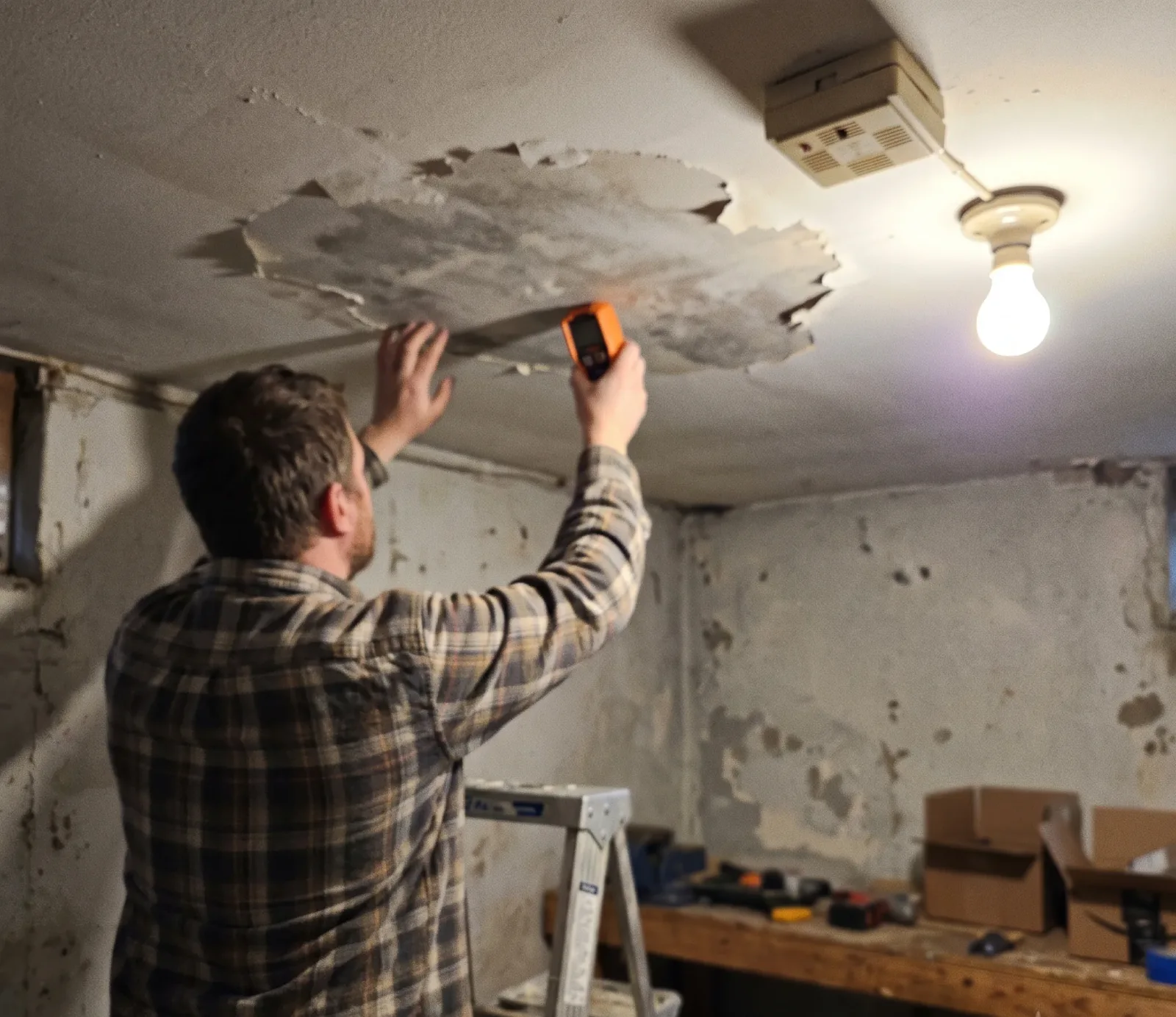
One reading is one spot, and one spot is not a room. Water tracks along a slab and climbs drywall unevenly, so a probe pushed in eighteen inches away from a stain can report perfectly dry while the framing behind the baseboard is still soaked. A lone figure also has nothing to be measured against, which leaves it a number with no verdict attached to it.
Setting the Dry Standard
Wood and drywall don't hold moisture the same way, so raw numbers can mislead. Meters convert readings into a wood moisture equivalent, a relative scale that lets a technician compare drywall, subfloor and framing lumber on similar terms. Material density changes what a normal reading looks like, too. A dense oak floor in a Hyde Park bungalow reads differently than the plywood underlayment beneath it, even at the same actual moisture level.
Comparing Day Over Day
Readings get taken at the same marked points, with the same instrument, every day the equipment runs. What matters is the direction of travel rather than any single figure. A wall reading the same on Tuesday as it did on Monday is saying the drying plan needs changing, not that the room is nearly there.
Density Changes the Reading
Material density changes how a meter reads even when the actual moisture content is identical between two spots. Dense hardwood flooring in an older Allandale home will read differently than the plywood subfloor underneath it, even if both absorbed the same amount of water. That is part of why raw numbers cannot be compared across different materials, only against a reference reading on that same material type.
Why Calibration Still Matters
Pin meters carry a species or material setting, and leaving it on the wrong one shifts every figure the device reports. Oak and pine do not conduct the same way, so an instrument set for one and used on the other produces a confident answer that means very little. Checking it against a known standard is what keeps Monday's figures comparable with Friday's.
Why This Matters at Home
For whoever is paying for the work, this is what separates a finished job from a job that merely looks finished. Accept dry to the touch in a slab-built house and the wet edge under a cabinet kick or behind a run of baseboard simply stays where it is, quietly, until a stain or a smell brings it back weeks later at a far larger cost.
Judgment Still Decides
For an Austin homeowner standing in a drying room wondering when the fans can finally come out, this is the practical payoff: the decision isn't a guess. It's a comparison between today's reading and a baseline reading taken from that same house. When the affected material matches the unaffected one nearby, the drying is done, not because it looks done, but because the numbers agree.
What a Clean Result Looks Like
A finished drying job in an Austin home should show readings at or near the reference across every spot checked, not just the one that looked worst at the start. Anyone reviewing the numbers should be able to see the trend from the first baseline reading to the last, room by room, without gaps in the record.
Dealing with this in your home?
Austin's clay soil expands after rain and pulls back tight in a hard freeze, so a post-tension slab near Zilker can crack years after the pour. Add Hill Country storms that dump inches in an hour, and Shoal Creek pushes water toward homes that never flooded before.