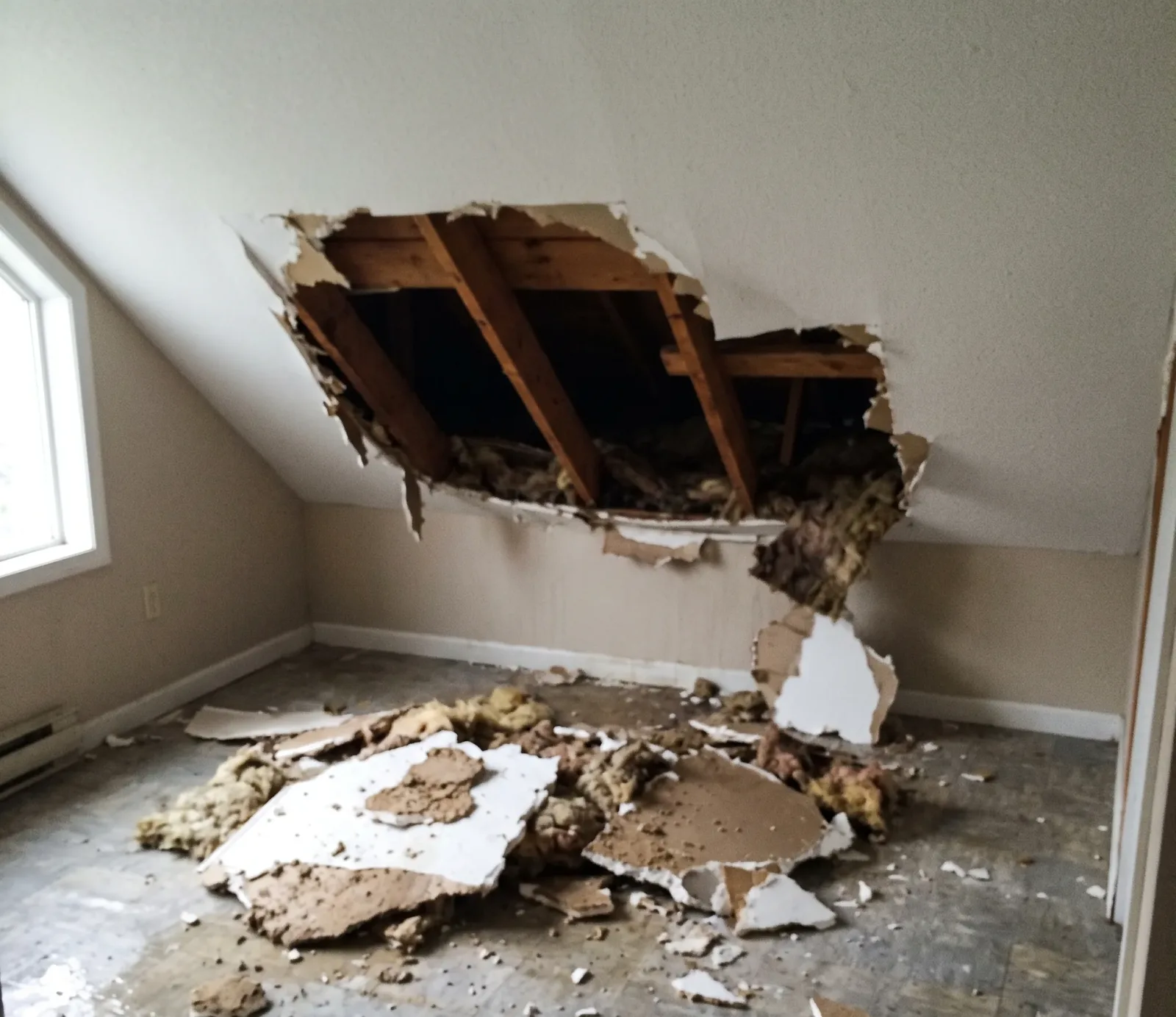
A pipe bursts behind a shared wall in a Downtown Austin high-rise, and water drops into the unit below before anyone upstairs notices. Two owners, both paying dues, both wondering which policy answers first. Texas doesn't hand condo buildings a single statute spelling out this split. The answer usually sits inside the building's own governing documents, not state law, and it changes from one Austin tower to the next.
What the Master Policy Covers
The condo association buys a master policy through monthly dues, and it's built to protect the structure everyone shares. That typically means the roof, exterior walls, load-bearing framing, plumbing risers running through walls, and hallways or elevators serving the whole building. In a high-rise near Congress Avenue, that master policy is what responds first when a shared pipe or the building envelope itself is what failed, not something inside a single owner's unit.
Where the Unit Interior Starts
Bylaws generally mark the unit interior as everything inside the unit's own walls, floors, and ceiling finishes. Paint, drywall, cabinets, flooring, and fixtures installed inside the unit usually fall to the unit owner to insure and repair. So water that soaks a unit's carpet or bubbles its ceiling paint, after starting from a shared source above, can still land as the owner's repair cost rather than the association's, depending on exactly where the damage sits.
Betterments Change the Math
Betterment is worth learning early. It covers anything a unit owner added beyond what came with the unit originally, like a quartz countertop swapped in over builder-grade laminate, or custom built-ins added later. A master policy usually rebuilds to the original condition, not the upgraded one. An Austin condo owner near West Campus who added hardwood over original carpet may find that upgrade sits outside what the master policy will pay to replace.
Common Elements vs Common Areas
Governing documents often separate common elements from common areas, and the two aren't quite the same thing. Common elements are the structural and shared systems serving the entire building, like plumbing risers, the roof, and load-bearing walls. Common areas are the shared physical spaces owners walk through, like a lobby, hallway, or parking garage. A leak from a shared riser in a Rainey Street tower is a common-element failure even if the water ends up staining a common-area hallway ceiling.
The Loss Assessment Gap
Loss assessment coverage on a unit owner's policy exists for one reason: master policies carry deductibles too, often several thousand dollars, and a condo association in a Downtown Austin tower can bill that gap back to every owner. Check the bylaws for how assessments get split — some buildings divide evenly, others by unit square footage.
Read the Governing Documents
The declaration, bylaws, and any rules the association board has adopted together form the governing documents, and they're the real source for how a specific building splits responsibility. Two condo buildings a few blocks apart in Austin, one near Zilker and one near the Capitol, can draw the interior-versus-shared line differently. Reading the actual documents for a specific building matters more than assuming a general pattern applies everywhere.
Two Leaks, Two Deductibles
One event can trigger two deductibles at once. The association pays the master policy deductible on the shared portion, and the owner pays their own on the interior finishes, because neither policy absorbs the other's. Two separate water events in a single year mean the owner's deductible applies twice over, once for each claim, however small the second one turns out to be.
When the Source Isn't Clear
A condo association's master policy in Austin usually covers common elements — the building structure, roofs, shared plumbing risers, hallways, and common areas — while the unit owner's own policy covers unit interior finishes, fixtures, and belongings inside the walls. Governing documents and bylaws set the exact line, and it can shift by building. When a pipe fails, the association board and its deductible often enter the picture before a homeowner's claim does, and betterment upgrades or a loss assessment can still land back on the unit owner.
What the Association Board Sets
A board decides the things the declaration leaves open. Whether to claim on the master policy or absorb a small loss. Which contractor takes the shared repair. How soon a riser gets inspected after it fails, and whether owners are billed for a shortfall. Those calls happen in meetings and are recorded in minutes, and an owner waiting on a shared wall can usually ask to read them.
Document Before You Call
Photographing the damage as soon as it's found, noting the date it was first noticed, and identifying exactly which surfaces are affected gives both the association and a unit owner something concrete to work from. That record matters whether the water touched only unit interior finishes or reached into common elements like a shared wall cavity. An owner near Mueller who documents early has a clearer claim than one relying on memory weeks later.
Where the Pattern Ends
None of this substitutes for pulling your building's actual bylaws and calling the association board with the specifics of your leak. What's laid out above is the usual division of labor, not a guarantee for every Austin building. Once the water's identified and the responsible policy is clear, drying out the unit quickly still matters for the interior itself.
Dealing with this in your home?
Austin's clay soil expands after rain and pulls back tight in a hard freeze, so a post-tension slab near Zilker can crack years after the pour. Add Hill Country storms that dump inches in an hour, and Shoal Creek pushes water toward homes that never flooded before.