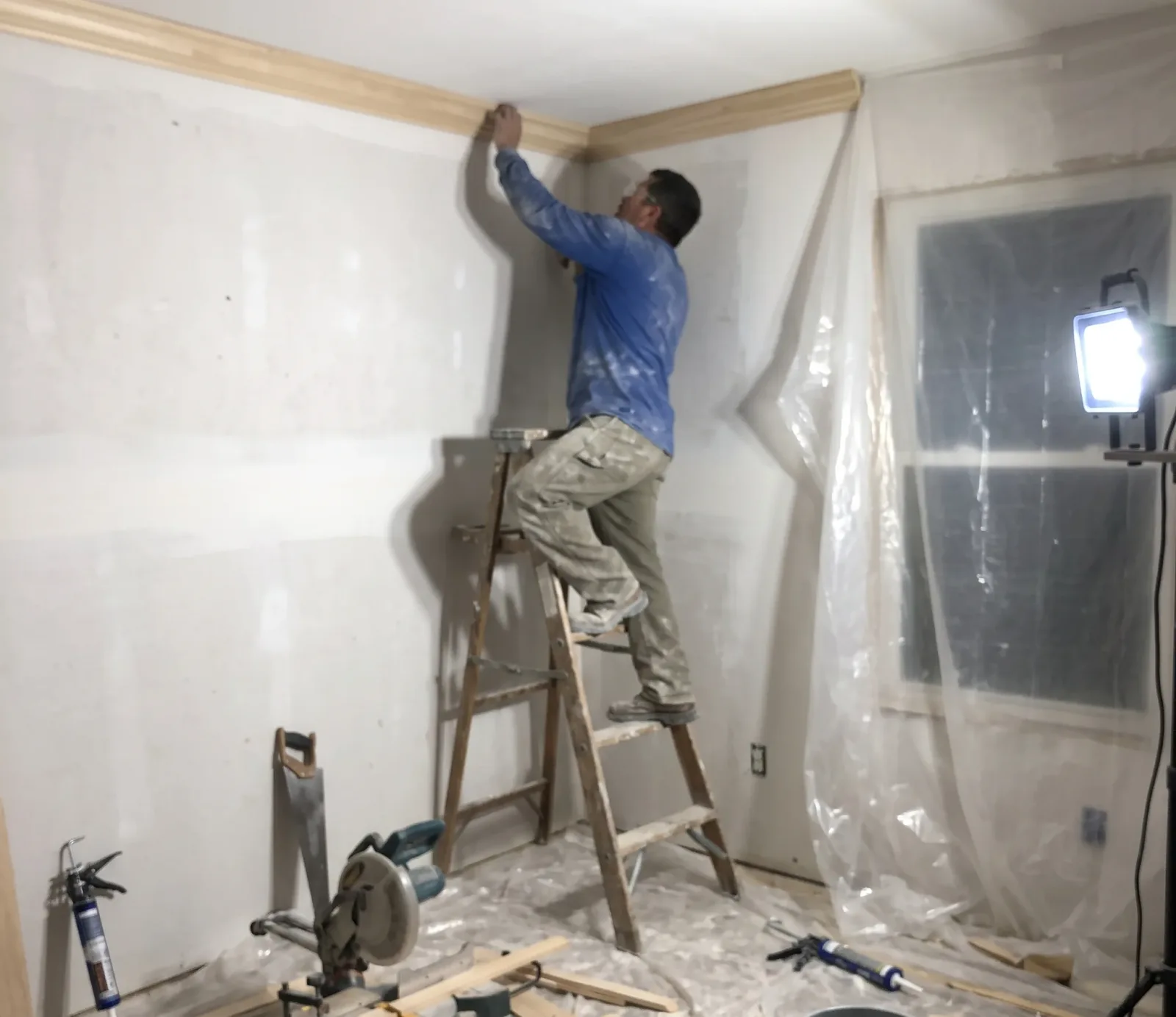
After a slab leak or a flash flood off Shoal Creek, the camera on your phone matters as much as any towel. Adjusters weigh what they can see, not what you describe from memory. Before movers or drying equipment touch a damaged room in Austin, capture wide shots of every wall, close-up photos of ruined baseboards, and a timestamped video walkthrough of the whole affected area.
Start With Wide Shots
Before anything gets carried outside or torn out, walk every room the water reached and shoot a wide shot from each doorway. A wide shot shows how far the water spread and which walls, floors, and baseboards it touched. Do this in Tarrytown, Hyde Park, or any Austin neighborhood the same way: doorway first, then move room to room in order.
Follow With Close-Ups
With the wide shots done, go back and take a close-up photo of every specific problem: a swollen baseboard, a stained ceiling tile, a cabinet base gone soft. These close-ups are what an adjuster in Austin uses to price line items, so get low, get level with the damage, and let the camera focus before shooting.
Timestamp Every Photo
A photo with a timestamp holds up better than one without it. Most phones stamp the date and time automatically, but check the setting before starting, since some cameras or messaging apps strip that data on export. If a photo loses its timestamp, note the date it was taken somewhere else, like a text to yourself.
Record A Video Walkthrough
A video walkthrough catches what still photos miss: how water traveled from one room into the next, or how a slab leak near a kitchen reached a hallway two rooms over. Narrate while filming, room by room, the way you'd describe it to someone who wasn't there. An Austin home with an open floor plan especially needs this, since water moves along the slab in ways a single photo can't show.
Save Any Before Photo
A before photo only works as evidence if it exists somewhere already. Check phone albums, old listing photos, or a past renovation post for a shot of the same room before the water event. Comparing a stained ceiling in a Cherrywood bungalow to what it looked like a year ago tells an adjuster more than the damage photo alone ever could.
Log Moisture Readings
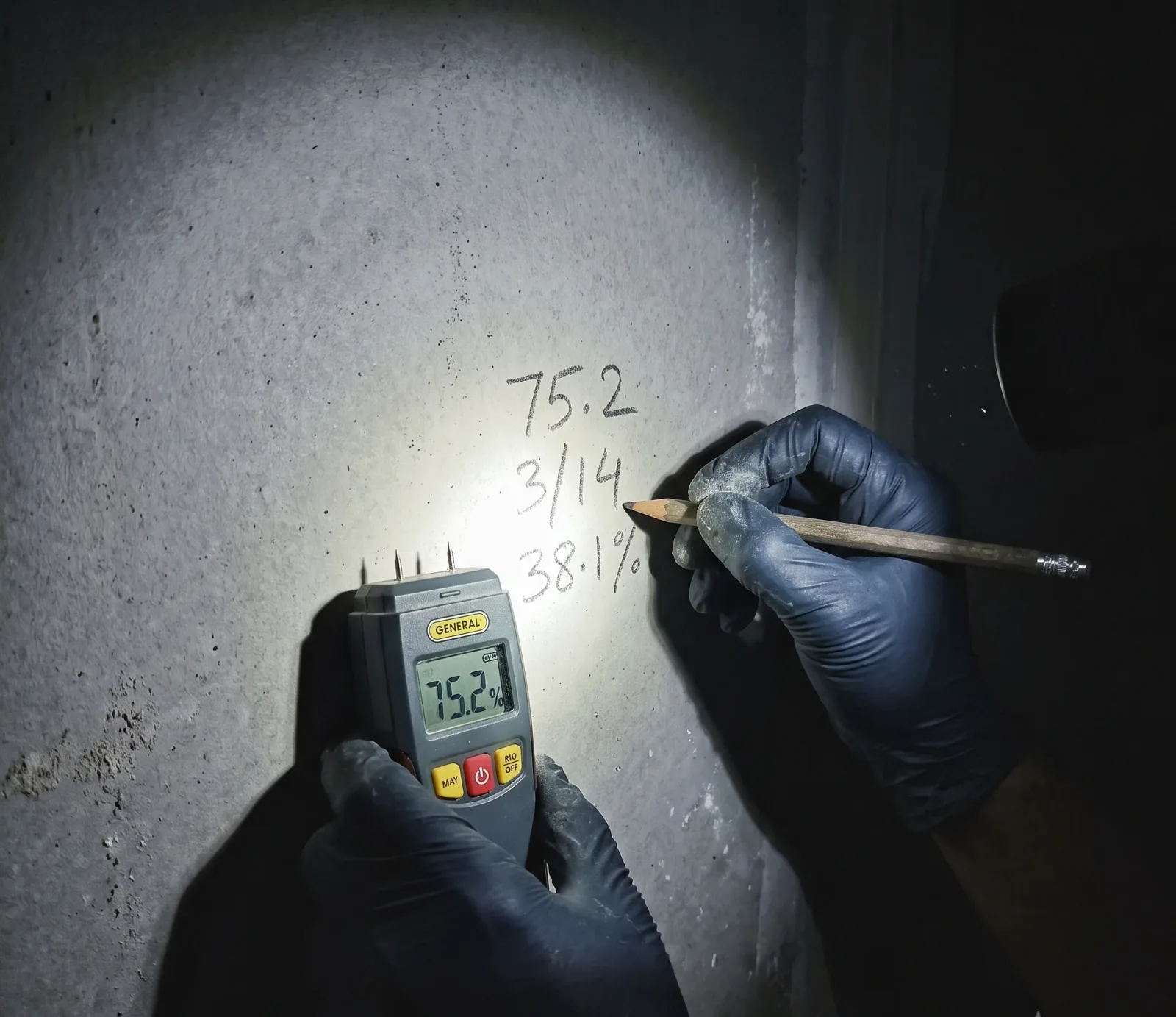
A moisture reading turns what a photo shows into a number an adjuster can act on. Drywall or subfloor near Barton Creek or Shoal Creek can hold water well past what the eye picks up, so a reading from a moisture meter matters even in rooms that look fine. If the licensed pros you connect with during an assessment take readings, ask for the numbers in writing.
Build A Contents Inventory
Damaged contents deserve a list separate from the structural photos of the affected area. Walk each room in Hyde Park or Mueller and note furniture, rugs, electronics, and appliances the water reached, with a close-up photo of each item next to a wide shot showing where it sat in the room. This inventory list becomes the backbone of the contents portion of a claim.
Attach Receipts And Serials
A receipt or serial number turns a guess into a number an adjuster can't easily argue down. Photograph the tag on the back of a television, the model plate on a washer, or a stored receipt on a phone, and match each to its line on the inventory list. Without that pairing, an insurer often defaults to the lowest plausible replacement cost instead of what the item actually cost.
Back Everything Up
Once the photos, video, and inventory list exist, get them off the phone and somewhere else. Email the files to yourself, upload them to a cloud folder, or text them to another household member as a second copy. A phone can get dropped in standing water or lost in the cleanup itself, and a digital backup means none of that documentation disappears with it.
Track Who Touched What
If more than one person is in and out of an Austin home before an adjuster arrives, keep a rough chain of custody. Note who was there, when, and whether they moved or removed anything, even a rug set outside to dry. A short list like this settles disputes later about whether something was damaged before or after the water event.
Get A Digital Backup Right Away
None of this requires a contractor, an adjuster, or anyone else standing in the room. A homeowner in Windsor Park or a renter near South Lamar can walk through with a phone, take the wide shots, close-ups, and a video walkthrough, and back up every file before a single call gets made. Waiting on someone else to start only shrinks the window for a clean before photo.
Dealing with this in your home?
Austin's clay soil expands after rain and pulls back tight in a hard freeze, so a post-tension slab near Zilker can crack years after the pour. Add Hill Country storms that dump inches in an hour, and Shoal Creek pushes water toward homes that never flooded before.