An Austin home on a slab rarely floods all at once. Water usually seeps in slowly, through a foundation crack near Circle C Ranch or a roof flashing in Travis Heights, and by the time anyone notices, it has already been moving through the walls for weeks. The clues start small and stay small until someone looks closely.
Where Moisture Hides First
Central Texas humidity keeps moisture trapped inside walls longer than a dry climate would, so a leak near Hyde Park or Mueller can sit unnoticed behind drywall for a long stretch. Paint is often the first surface to react, but by the time it shows anything, the material behind it has usually been wet far longer than the stain suggests.
What Paint Gives Away
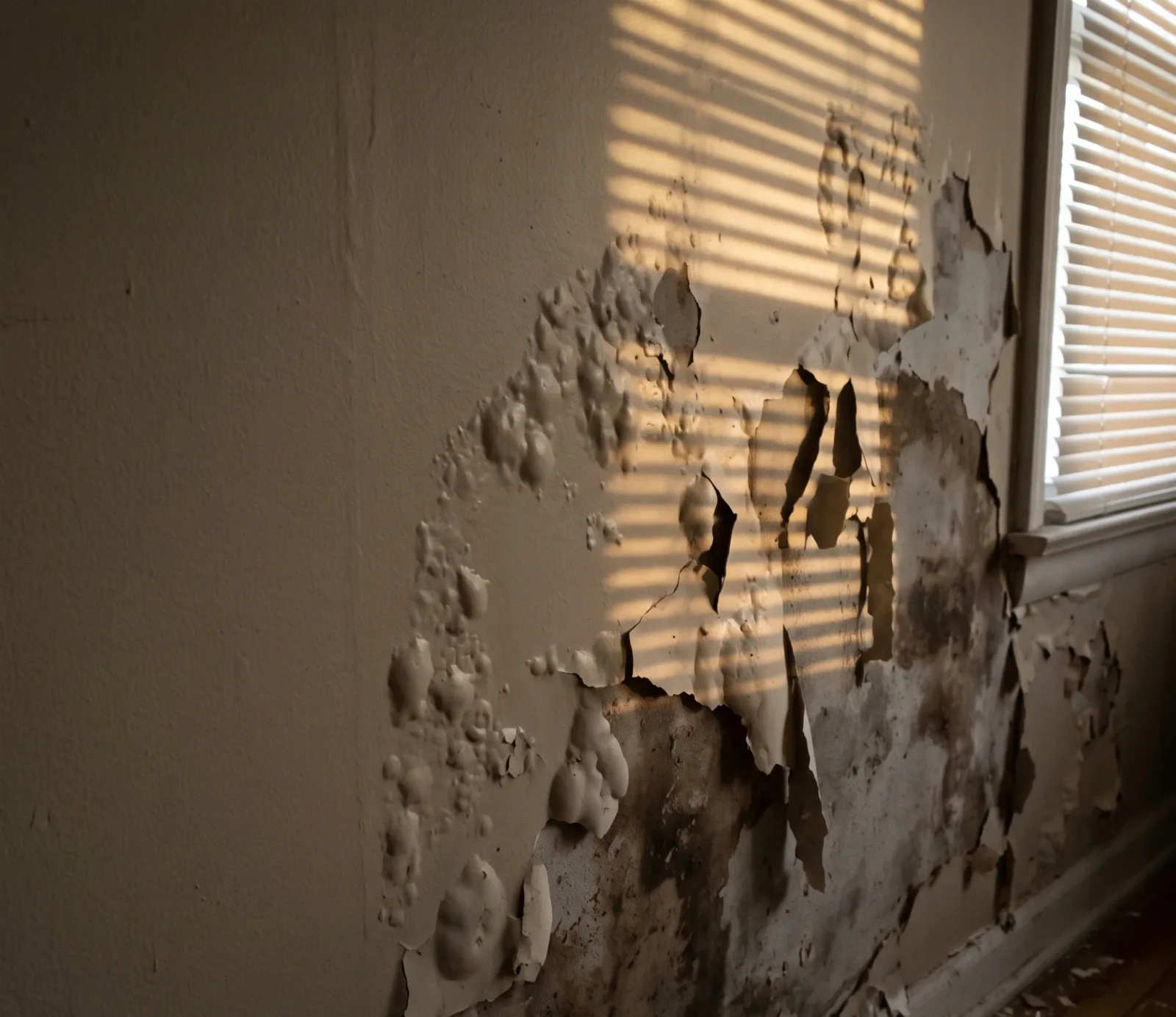
Peeling paint is one of the plainer signs. Moisture behind a painted wall breaks the bond between paint and surface, so it lifts, flakes, or bubbles outward instead of staying flat. In older homes around Clarksville or Cherrywood, this often shows up near a window frame or along a lower wall long before a homeowner suspects a leak.
Baseboards And Floor Trim
Warped baseboards are easy to overlook because they sit at floor level, out of the sightline most people use walking through a room. Wood trim that has pulled moisture from a wet slab or subfloor will cup, bow, or separate from the wall, often in just one short stretch near Windsor Park or South Lamar rather than the whole room.
Drywall And Ceiling Changes
Bubbling drywall shows up before a sagging ceiling, and it is worth catching at that earlier stage. Drywall that has taken on water loses its rigidity and starts to swell or ripple, sometimes with a faint discoloration spreading outward from one point. A ceiling that later sags near Rosedale or Brentwood usually had this stage happen first.
Reading A Water Stain
Water stains vary in what they suggest. A round mark with a distinct ring, lighter toward the middle and deeper toned near its outer edge, points to water sitting in one place and evaporating slowly over time. A stain near Allandale or North Loop that keeps returning after cleaning usually means the source was never actually fixed.
Floors That Move Or Soften
Floors tell their own story. In a Cherrywood bungalow or a Travis Heights kitchen, wood that swells and cups near an appliance or exterior wall usually points to moisture working underneath it, not just spilled water on top. Press near the edges of tile or laminate — give under your weight, or a hollow feel, means the subfloor absorbed water it never fully released.
Rust And Metal Fixtures
A rust stain on a wall or around a fixture usually points to a nearby metal component, a pipe fitting, a nail head, a duct strap, staying wet longer than it should. In homes around Mueller or Hyde Park with older plumbing runs, this kind of stain often shows up well before any visible water reaches the surface.
The Smell That Lingers
A musty smell that returns after cleaning, especially in a closet or interior hallway near Travis Heights or Crestview, usually means moisture is sitting somewhere the eye can't reach. Delamination inside a cabinet base or under a laminate floor can produce the same odor without any visible stain nearby, which is why smell alone is worth taking seriously.
Crawl Spaces And Attics
Pier-and-beam homes, more common in older parts of Austin like Clarksville or Rosedale, have a crawl space that deserves a direct look rather than a guess. A torn vapor barrier or standing water under the house often goes unnoticed for a season, while an attic with damp insulation or dark streaking on the rafters near the roofline tells a similar story above the ceiling.
Checking Trim And Wood By Touch
Swollen wood can be felt before it is fully visible, so pressing gently on a door casing or window sill near Oak Hill or South Congress sometimes reveals dampness the eye missed. Wood that gives slightly under light pressure, or trim that feels soft at a seam, is often the first physical confirmation that a visual sign was real.
When A Second Look Helps
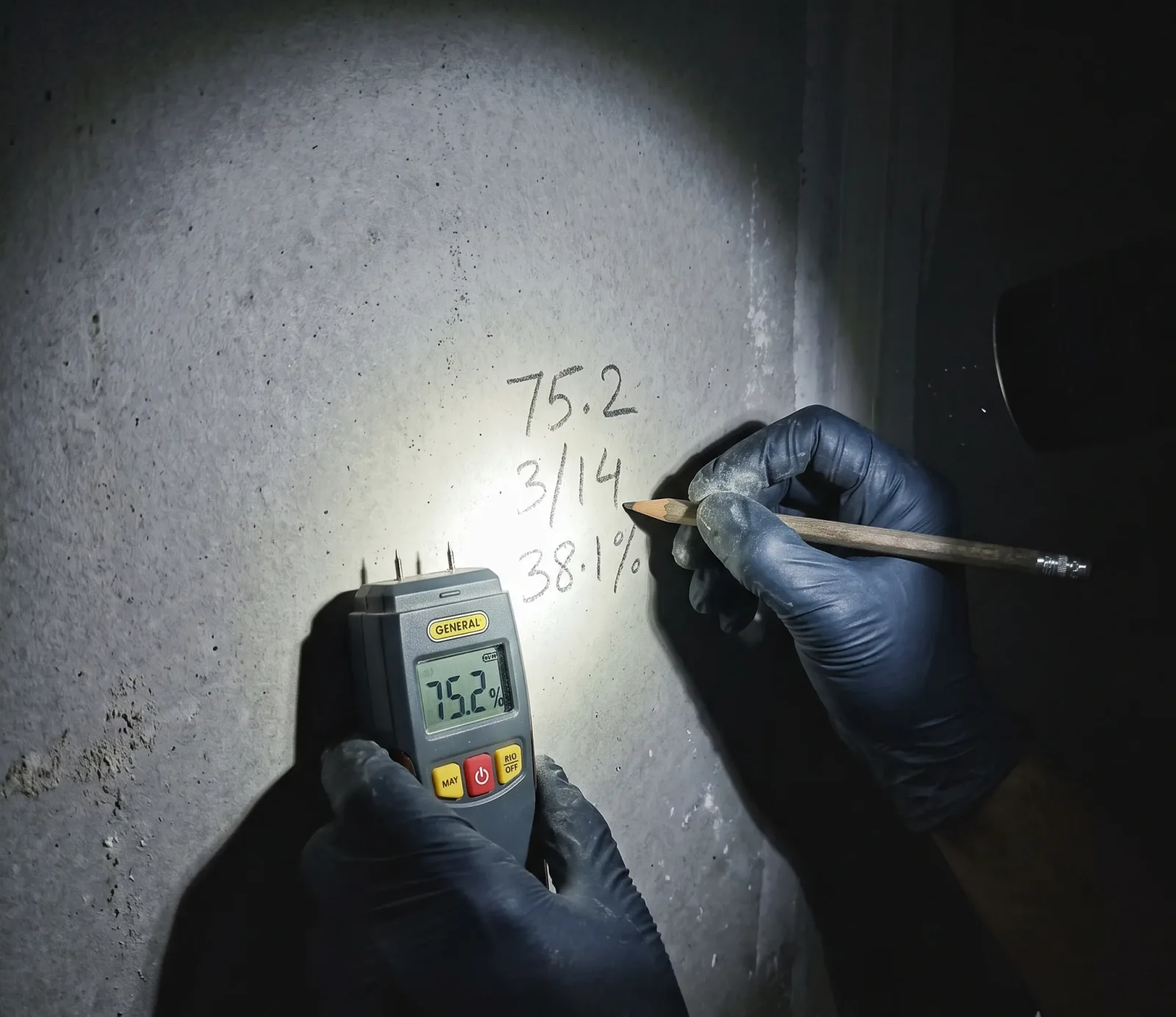
These signs point toward a problem, but none of them show how far it has spread inside a wall or under a floor near Mueller or Travis Heights. A moisture reading taken at the surface can confirm whether a stain, a soft spot, or a musty smell is still active or just a leftover trace from something already dried out.
Dealing with this in your home?
Austin's clay soil expands after rain and pulls back tight in a hard freeze, so a post-tension slab near Zilker can crack years after the pour. Add Hill Country storms that dump inches in an hour, and Shoal Creek pushes water toward homes that never flooded before.