Musty smell near baseboards
A musty smell or dark staining at seams often means moisture is trapped under laminate, tile, or carpet. A mold assessor can check moisture content before anyone lifts the flooring or starts remediation.
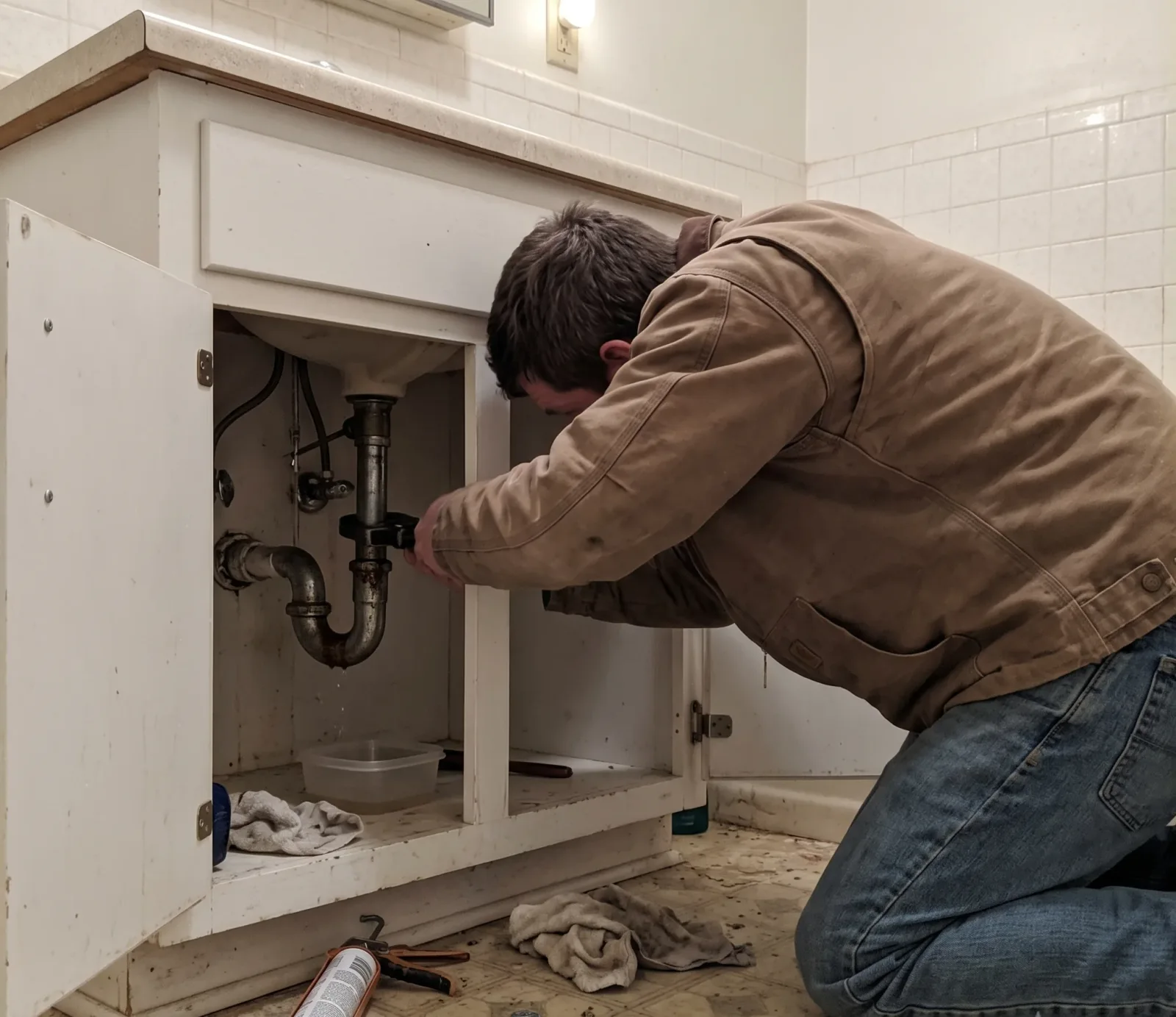
Reports under flooring in Austin often follow Hill Country storms and flash flood alley rain events, when water finds its way under baseboards, plus the slow months after any hard freeze pipe burst goes unnoticed.
Mold under flooring in Austin usually means water got beneath the covering and stayed there, from a slab crack, an appliance line, or a floor laid back down over a subfloor that was never dry. Because the inspection and the removal are separate licensed roles here, expect one company to scope it and another to lift the floor.
Hill Country storms drop rain fast, and Barton Creek Greenbelt runoff can push water toward Zilker and Bouldin Creek within the hour. A hard freeze months later bursts pipes the same slab already stressed.
A musty smell or dark staining at seams often means moisture is trapped under laminate, tile, or carpet. A mold assessor can check moisture content before anyone lifts the flooring or starts remediation.
Cupped boards usually mean water sat under the flooring long enough to swell the wood. That points to a past leak or slow moisture intrusion that needs checking before new flooring goes back down.
Staining at subfloor seams suggests water moved sideways under the flooring after a spill or slab leak. The affected material may need to come up so a remediator can confirm how far it spread.
Grout that will not dry points to moisture rising through the slab or lingering under tile from a prior repair. High relative humidity in the room can also keep it from drying between cleanings.
Soft or springy flooring near a wall often means the subfloor underneath has absorbed water and stayed wet. That's usually where growth is furthest along and hardest to see from above.
Austin homes built on slab foundations can develop small cracks as clay soil shifts, letting moisture reach the subfloor from below without warning. Flooring installed directly over a slab traps that moisture against the underlayment.
A burst pipe from a rare hard freeze, like Winter Storm Uri, can soak flooring in a Windsor Park or Rosedale home before anyone notices, and mold can begin within a day or two if the area isn't dried fast.
Expansive clay under East Austin and Mueller shifts with every wet-dry cycle, and that movement is what actually cracks a slab, not the water itself. Once the crack opens near a bathroom or kitchen line, water finds its way in on the next rain.
Old adhesive stains or water rings left from a past mop job get mistaken for growth under flooring. Lab-confirmed sampling by a mold assessor is the only way to tell them apart. An old adhesive stain sits flat, stays the same size, and wipes clean at the edges. Growth has texture to it, spreads outward between one look and the next, and usually brings a smell with it. The surer test is underneath: lift a corner and see whether the subfloor reads wet on a meter, because a stain left by a past mop job has dry timber behind it.
The licensed pros we connect you with start by setting up containment around the flooring section so spores from the affected area do not travel through the ductwork or HVAC system into other rooms of the Austin home.
They then remove the flooring and any porous underlayment that cannot be cleaned, dry the subfloor to the correct relative humidity, and prepare the area for post-remediation verification before new flooring goes down.
Limestone sits close to the surface west of Interstate 35, while Blackland Prairie clay dominates east toward Mueller and Windsor Park. That clay swells after rain and pulls back as it dries, working against slab foundations year after year until a crack finally lets water reach the underside.
| How Fast They Arrive | First Steps |
|---|---|
| Water in Austin follows the Balcones Escarpment split near I-35. West of it, thin soil over limestone sheds rain fast toward Barton Creek and Bull Creek. East, in neighborhoods like Windsor Park and Mueller, clay holds moisture against slabs longer after any storm. | A Tarrytown home near Lake Austin and a Windsor Park house off Cherrywood age the same way structurally, but flood differently. Clay soil swells after rain and pulls at slab edges, while pier-and-beam homes near Hyde Park face crawl-space moisture instead of cracked concrete. |
| Onion Creek and Shoal Creek rise fast when Hill Country storms dump rain upstream. Homes near the floodplain in South Austin or along Waller Creek take on water at grade, not from a pipe. Cleanup timing matters more than the source once it's inside. | Austin homes sit on concrete slab foundations, not basements. When clay soil under the slab shifts or a pipe fails beneath it, water spreads sideways under the flooring before anyone notices a puddle. A homeowner near Travis Heights or Mueller often smells it before they see it. |
| Zilker sits near Barton Springs Pool, where limestone runs close to the surface and rainfall has nowhere to soak in slowly. Water sheets across yards toward Lady Bird Lake fast, reaching slab foundations within minutes of a Hill Country downpour, not hours. | Cedar fever season gives way to spring storms, and by the time Barton Springs Pool is crowded again, plenty of Austin homes have already taken on water once. What a house near Mueller needs after that first flood rarely matches what a Clarksville bungalow needs. |
This work sits under two distinct Texas credentials. The first covers looking beneath the covering and recording how far the affected area runs; the second covers taking the material out and drying the subfloor underneath. One firm generally cannot use both on a single job. Small jobs fall outside the rule, and so does a homeowner tackling the house they live in. Because a floor conceals the extent until it is lifted, ask whether the scope can be reopened once the subfloor is in view, and who signs the work off before a new floor goes down.
Mold under flooring in Austin usually starts with water that got underneath and stayed there: a slow leak from a dishwasher line in a Hyde Park kitchen, a slab leak from clay soil movement pushing against plumbing, or flooring installed over a subfloor that never fully dried after a hard freeze pipe burst. Because the moisture is hidden, growth can spread across the underlayment for weeks before a musty smell or a soft spot in the floor gives it away. Vinyl, laminate, and tile all trap moisture differently, so the mold assessor's inspection depends on knowing which flooring type sits on top.
A homeowner can pull up a small, dry section of loose vinyl tile to look underneath if nothing appears wet or stained. Anything spreading across the subfloor, glued down, or covering more than a small patch needs a licensed mold assessor first. Cutting into flooring without knowing what's underneath can spread spores through a Bouldin Creek or South Lamar home's HVAC system.
A floor does not seal off what grows beneath it. Air travels through expansion gaps, around floor vents and along the baseboard line into the room. Households vary in what they notice. Nothing written here diagnoses anyone or predicts an outcome from the work. The practical questions concern the structure: how long the subfloor has held water, how far it ran sideways beneath the covering, and what let it in. A sealed tile or vinyl surface keeps that moisture in place far longer than a floor with somewhere to release it.
A cracked slab near Mueller or Hyde Park can push water under the flooring for days unnoticed. Call (512) 764-6583 to reach a licensed pro near you.Water that sits for days near Zilker or Hyde Park can turn a drying job into a mold job. Once growth starts, TDLR-licensed mold remediation is priced apart from extraction and drying. Ask for both numbers in writing before the licensed pros in Austin start work. pricing guide, and the service that handles this is Mold Remediation.
Mold Remediation Guide. Bathroom mold in Austin forms when shower humidity outpaces a weak exhaust fan, common in older homes around Hyde Park or Clarksville.
Mold in the HVAC System. Air handler and duct mold grows when a cooling coil stays wet or ductwork runs through humid attic space, feeding condensation into the system.
Mold After Flooding. Post-flood mold shows up in Austin homes days after flash flooding off Waller Creek or Boggy Creek leaves carpet, drywall, or baseboards wet.
Yes. Texas licenses mold assessment and mold remediation separately under Occupations Code Chapter 1958, administered by TDLR, and this applies to homes in Mueller, Crestview, or anywhere else in Austin. Small-scale exemptions exist for minor projects and property-owner self-work, but most under-flooring cases involve enough hidden material to require a licensed assessor.
It depends on the covering and how long it stayed wet. Sealed tile over a dry slab can often stay put. Carpet and pad, laminate, and engineered board that swelled at the seams normally come out, because the water sits in the layer underneath rather than on top. The subfloor decides it more than the surface does, and that is not visible until the floor is lifted.
Look for flooring that feels soft or springs back slowly underfoot, discoloration near baseboards, or a change in the air near a kitchen or bathroom after Central Texas humidity has been high. Homes near Waller Creek or in older Hyde Park houses with older subfloors are worth checking after any slow leak.
Only if it's a small, dry, loose section with no visible staining or spread. Anything glued down, damp, or covering more than a small area needs a licensed mold assessor first, since cutting into an unknown wet subfloor can push spores into the HVAC system.
Austin's east side sits on Blackland Prairie clay that expands after rain near Boggy Creek and Waller Creek, then pulls back tight once the ground dries out. That constant shift stresses a slab foundation until a seam finally opens under the tile.
Call (512) 764-6583