Austin sits on ground that swells and shrinks with the weather, and that movement is what cracks slabs from Circle C Ranch to Windsor Park. The clay under much of the city holds water rather than letting it pass through, so a foundation here deals with pressure most homeowners never think about until a wall or a floor tells them. This piece looks at how that soil behaves and what changes it.
Why Clay Holds Water
Clay particles are flat and packed tight, so water has a hard time moving through them the way it would through sand or loam. Instead of draining away after a storm, the water sits against the soil near a slab edge or a foundation wall. That trapped moisture is what makes clay soil act differently than the looser ground you might find near a creek bank in Hornsby Bend.
Swelling And Shrinking Explained
When clay soil takes on water, the particles absorb it and expand, sometimes lifting or pushing against whatever sits nearby. Dry the same clay out during a hot Austin summer and it shrinks back down, pulling away from a foundation instead. That swing between swollen and shrunken is soil movement, and it happens under most yards in this city more than once a year.
The Pressure Against A Wall
A foundation does not just sit on soil, it pushes back against it, and wet clay pushes harder. After heavy rain soaks into the ground around a slab or a foundation wall, the added weight and volume of that saturated clay builds hydrostatic pressure against whatever it touches. Over years, that repeated push is a common reason a straight wall develops a lean or a slab edge lifts unevenly.
Where Grading Comes In
Grading is the direction water travels once it leaves the roof and hits the ground. A yard that tilts toward the house instead of away from it sends every storm's runoff straight back to the foundation, and clay soil holds onto that water rather than letting it move on. Checking which way a yard actually slopes, not which way it looks like it slopes, is where most drainage problems start.
What A Downspout Extension Does
Downspout extensions carry roof runoff several feet past the foundation instead of dropping it right at the wall. Without one, a downspout dumps a concentrated stream onto the same few square feet of clay every time it rains, and that spot never gets a chance to dry between storms. Extending the discharge point is a small change that keeps saturated clay from building up in one place near the slab.
When A Drain Helps More
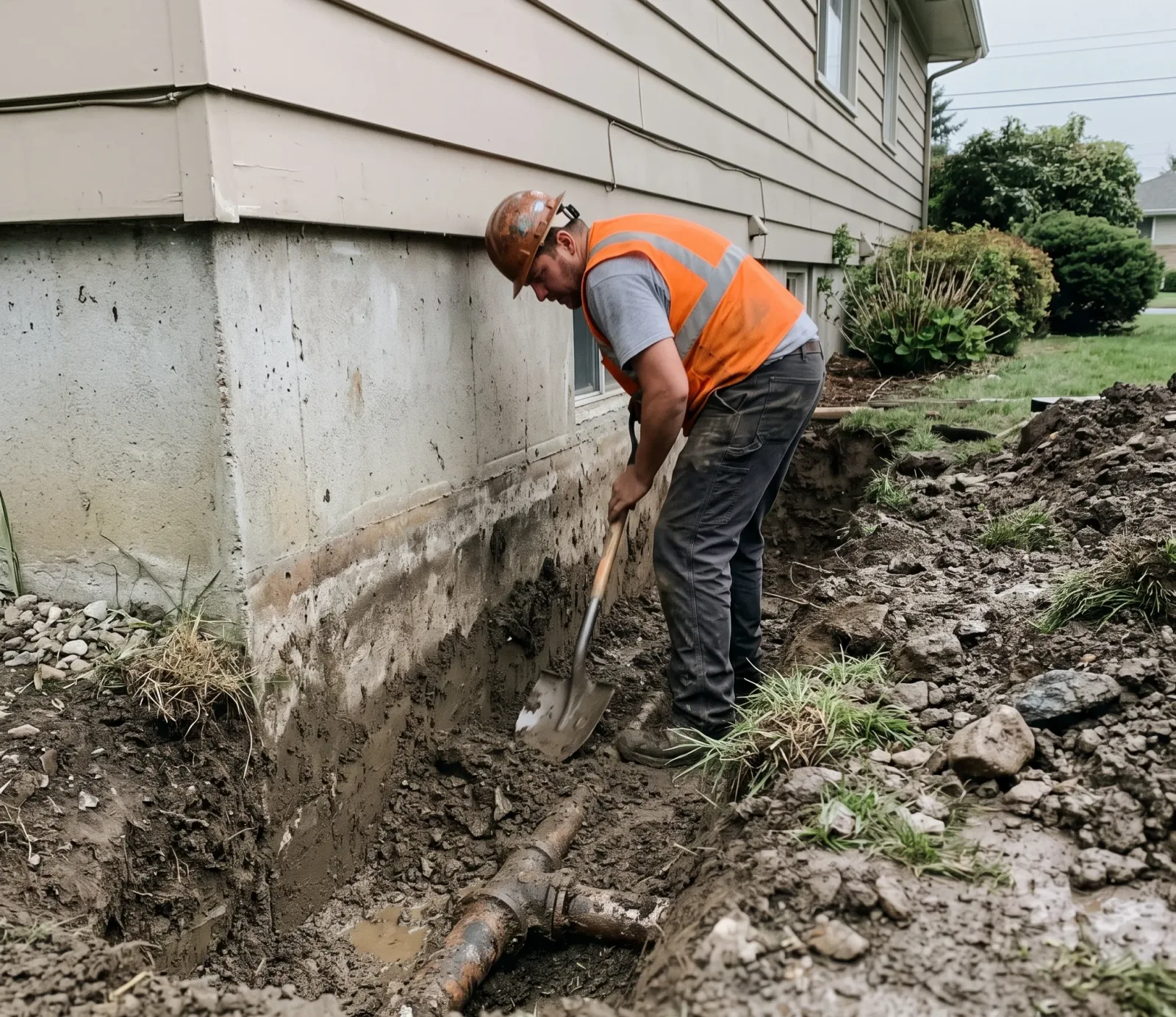
Surface grading only handles water that stays on top of the ground. When the water table nearby sits high or clay stays saturated below the surface, a drain buried along the foundation gives that water somewhere to go besides pressing against the wall. It is one more layer of protection, not a replacement for fixing the slope of the yard first.
How Settlement Shows Up
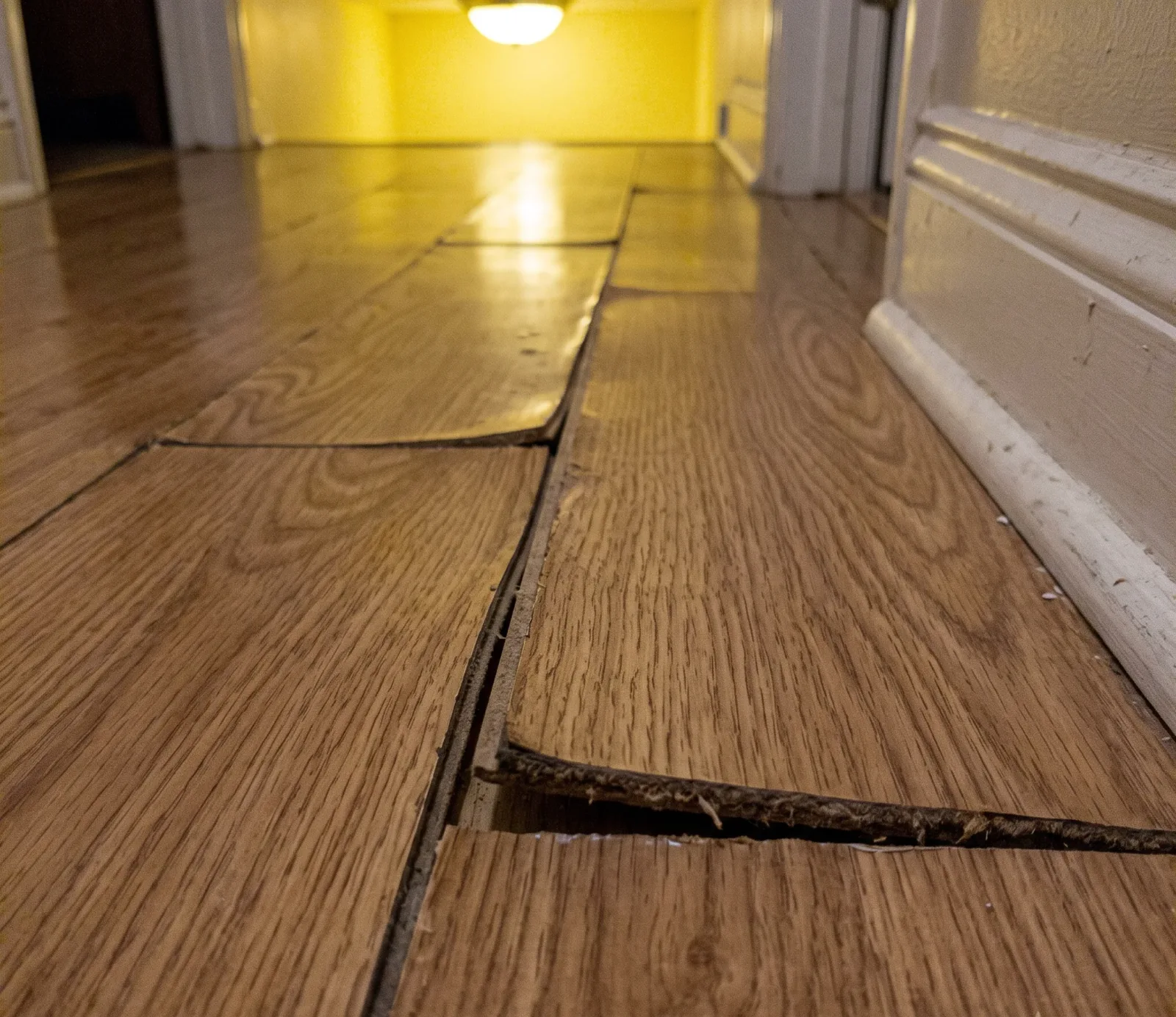
Settlement is the ground giving way under part of a foundation, usually because the clay beneath one section dried and shrank while another section stayed wet. A slab that settles unevenly shows it in ways a homeowner notices fast: a door that used to close easily, a floor tile that pops, a hairline crack that widens along a wall in Hyde Park or Travis Heights.
Reading A Crack Correctly
Expansive clay under a Travis County lot swells when it soaks up rain and shrinks again as it dries out. That constant movement is what pushes cracks into a slab or wall, not a single flood event. Grading that slopes away from the foundation, a working french drain, and downspout extensions that clear the soil near the house all reduce how much water that clay holds against your walls.
Landscaping Near The Slab
Landscaping choices change how much water clay soil has to deal with near a foundation. Beds packed with plants that need frequent watering, set right against the slab, keep that section of clay wetter than the rest of the yard. Spacing planting beds back from the foundation and choosing what gets watered close to the house both reduce how saturated that soil stays.
Why Drying Takes So Long
Central Texas humidity keeps evaporation slow even after grading and drains are doing their job, so clay near a foundation rarely dries as fast as a homeowner expects. That slower drying window matters most right after a heavy rain, when the soil is holding the most water it will hold all season and the pressure against the wall is highest.
Keeping Water Moving Away
None of this replaces a foundation engineer's opinion once cracking or settlement shows up, but grading, drains and downspout extensions are what keep clay soil from working against a foundation in the first place. Get water moving away from the slab before it ever has the chance to soak in, and much of the pressure this article describes never has a reason to build.
Dealing with this in your home?
Austin's clay soil expands after rain and pulls back tight in a hard freeze, so a post-tension slab near Zilker can crack years after the pour. Add Hill Country storms that dump inches in an hour, and Shoal Creek pushes water toward homes that never flooded before.